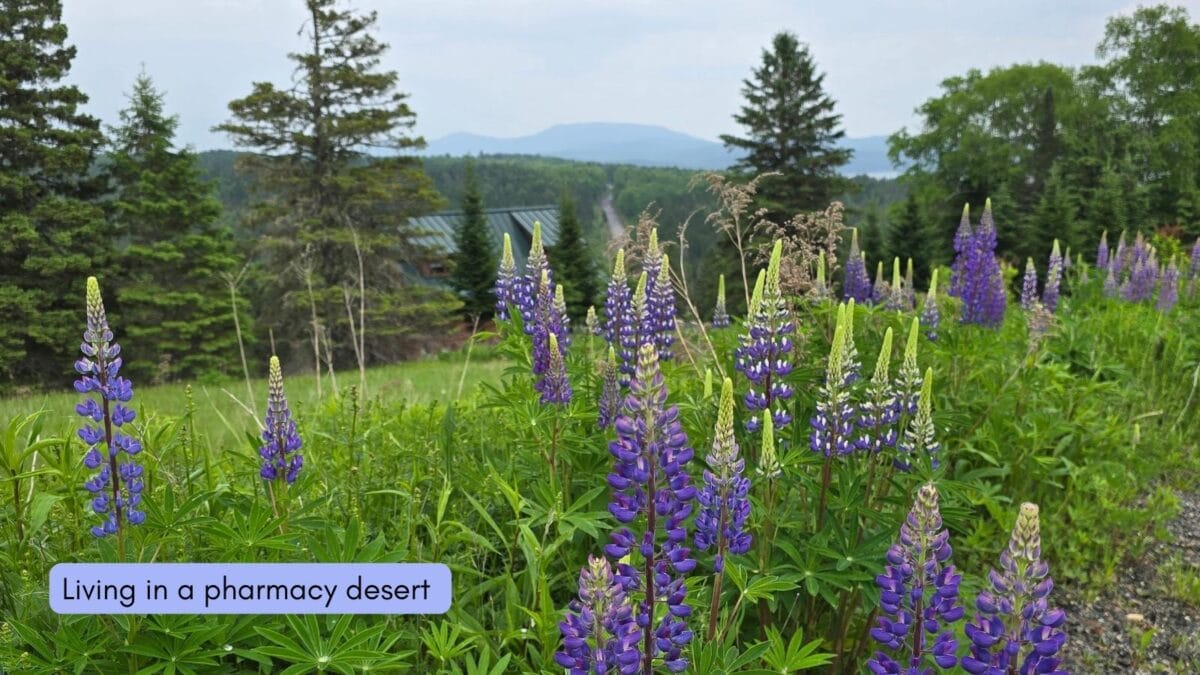
I heard this phrase the a few years ago t and loved it because it spotlighted our rural area as a “Pharmacy Desert.” In most places, the pharmacy desert is defined as people living at least 15 miles from a pharmacy.
Maine was called this, but our location is an hour away from any pharmacy. You may remember the big rainstorms we had several years ago, when there was no way out of town for three days.
My medicines got delayed, and I ended up sick for a month because of it. The prescriptions were supposed to be mailed out, but they weren’t. Then, we could not get there to pick up the refill.
Even last week, one of my husband’s medications was not sent out. We ended up taking a ride to get it as we needed groceries. The mail wait has also been delayed many times.
Key Things To Consider
- Rural Maine can feel like a true pharmacy desert, with the nearest pharmacy an hour away or more.
- Bad weather, flooding, and winter storms make picking up prescriptions harder and can delay refills for days.
- Planning ahead matters, from keeping extra medicine on hand to checking mail delivery and timing trips around the weather.
- In a pinch, some people rely on neighbors and Facebook to get prescriptions picked up in town.
- 90-day mail-order prescriptions can help, but they take time to set up and still have to arrive on time.
- If you live far from care, getting sick or hurt, or even needing a vet, can turn into a real problem fast.
Pharmacy Shortages
Maine’s pharmacy shortage is caused by staffing and economic issues. Smaller, rural areas struggle to attract pharmacists due to fewer incentives and higher workloads.
Big chain pharmacies have also been cutting hours, partly due to low reimbursement rates from insurance companies. Many pharmacists feel burnt out from juggling increased responsibilities, including giving vaccines and managing prescriptions.
Plus, fewer students are entering the field, deepening the problem. This combination has left communities with longer wait times and limited access to medication in an already pharmacy-desert area.
1. Planning in Pharmacy Desert Areas
We’ve always planned ahead as we know driving an hour one way and an hour back can take up a day if you also do grocery shopping and stop for lunch or other errands. We also try to pick the best weather day with winter storms lasting from October through April when mud season takes over.
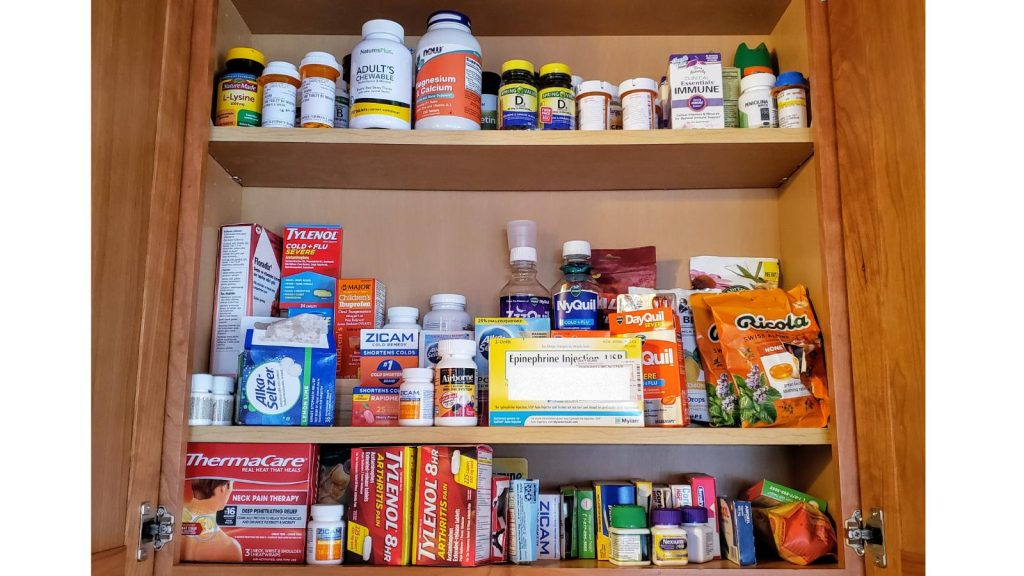
Even in the summertime, with big rainstorms, there can be flooding, and there is no way to leave town. Even friends who visit and see our cabinet filled with everyday medicines think we have a pharmacy.
We even signed up for mail delivery emails from the post office to find out if they are being sent so we can call to triple-check on them.
2. Others Rely On Facebook Friends in Pharmacy Deserts
People often post on local Facebook pages asking if anyone is entering the big town near the pharmacy. Oftentimes, others will pick up prescriptions for them. It’s nice when people can coordinate to do that. It’s not like we have Ubers around here to drive people.
There used to be a senior bus that took seniors for the hour ride, but I haven’t seen it lately.
3. Change to 90-day prescriptions
Some of our friends have switched to a 90-day mail-order prescription. It sounds like an excellent idea for many people.
We haven’t done this for a few reasons: One, we may be moving, and two, what if that gets delayed? We don’t want to drive halfway across the country to get our prescriptions.
It also takes time to set up, as you have to contact your doctor to have them change the prescriptions to 90-day refills, then call your medical insurance company and spend an hour on the phone, like I did last year, to inquire.
4. Don’t Get Sick or Get in An Accident
That sounds easier said than done, as we’ve experienced both over the years. Besides being hit by a moose while driving, we both had snowmobile accidents.
Where the weather is extreme, there are more opportunities for accidents, whether on the trails or just walking in your icy driveway. Other times, it may be your pet that needs attention.
Veterinarians are not readily available in rural areas, as many do not accept new patients. I had to call last week to inquire about getting our dog spayed.
The answering machine mentioned that they were not taking on any new clients. Thank goodness she already had her first visit there.
Conclusion: Living in Pharmacy Desserts
If you are thinking of moving to a rural area, check out where the closest pharmacy is. This is especially important if you are older and want to retire there, or if you have little kids who get sick often. The next location we planned had several pharmacies within 25 minutes.
But if you love being out in the woods, prepare to have as much medicine in the medicine cabinet in case you or your loved ones get sick. And, of course, don’t forget about your pet.
Frequently Asked Questions About Pharmacy Deserts
What is a pharmacy desert?
A pharmacy desert is an area where you don’t have easy access to a nearby pharmacy. In rural places, that often means the closest pharmacy is more than 10 miles away, though the exact cutoff can vary by study or report. The main issue is simple: you have to travel too far for routine prescriptions and basic medication needs.
Why are pharmacy deserts such a problem in rural areas?
Rural areas already have fewer pharmacies spread across larger distances, so one closure can leave you with very little access. If you don’t have a car, reliable rides, or good roads in winter, even a short prescription run can turn into a real hassle. That can lead to delayed refills, skipped doses, and more trouble managing long-term conditions like diabetes or high blood pressure.
How do pharmacy deserts affect your health?
They can make it harder to start medication on time, stay on schedule, or get emergency prescriptions filled quickly. When medicine is hard to get, you’re more likely to miss doses or put off refills, which can make chronic health problems worse. In some cases, that can mean more ER visits or hospital stays.
How far away is too far to count as a pharmacy desert?
There isn’t one single national cutoff that every source uses. In rural mapping and research, more than 10 miles to the nearest pharmacy is a common benchmark. For you, the real test is whether the trip is practical on a normal day, not just on paper.
What can you do if you live in a pharmacy desert?
You can ask your doctor or pharmacist about mail-order refills, 90-day prescriptions, or delivery options if they’re available. It also helps to keep a refill schedule so you’re not waiting until the last pill is gone. If transportation is the problem, check whether a local clinic, community program, or nearby family member can help with regular pickup trips.

Lisa moved from Southern New England to the rural mountains of Maine in 2020 with her husband. Drawing from her hands-on experience with slower-paced rural living, she shares the beauty, honest realities, and simple pleasures of life in the Maine woods, along with their rural travels across the United States and abroad.