Dealing with pesky insects is a common nuisance in rural Maine, but deer flies can be particularly bothersome. These speedy biters, with their painful nips and relentless buzzing around your head, can turn a peaceful hike, garden session, or backyard time with Stella into an exercise in frustration. That’s why knowing how to get rid of deer flies is essential for enjoying summer in Western Maine.
We’ve been battling them here in the mountains for several years now, right as black fly season starts to ease off in late June. Don’t let them ruin your outdoor fun. With practical strategies that actually work in our Maine Zone 4b/5a rural setting, you can fight back and reclaim your time outside.
Understanding A Deer Fly
A deer fly, as the name suggests, is a fly that is commonly found in areas with deer populations. These small insects belong to the Tabanidae family and are known for their painful bites.
What Are Deer Flies?
Deer flies are a type of biting fly (genus Chrysops in the Tabanidae family) common across North America, including right here in Maine’s wooded and wetland areas. They’re larger than houseflies, with distinctive dark wing patterns, and they thrive near standing water, marshes, or damp woods where their larvae develop.
In Maine, they typically ramp up in late spring/early summer and reach peak activity mid-summer (often June through August), coinciding with warmer, more humid days. Females bite for blood meals to reproduce, while males stick to nectar.
Their bites are sharp and leave itchy welts thanks to an anticoagulant in their saliva; much more aggressive than mosquitoes.
Why Are Deer Flies Annoying?
Deer flies can be extremely annoying for several reasons. Firstly, their bites are quite painful. When a deer fly bites, it cuts the skin with its sharp mouthparts and releases an anticoagulant to prevent blood clotting.
This anticoagulant can cause an allergic reaction in some individuals, leading to intense itching and discomfort. You may need to visit your local health clinic for aid.
Additionally, deer flies are persistent and can be difficult to swat away. They are fast fliers and can quickly evade attempts to ward them off. This can make outdoor activities, such as hiking, camping, or gardening, frustrating and unpleasant.
Furthermore, deer flies are attracted to movement, body heat, and carbon dioxide. This means that any activity or exercise in areas where deer flies are present can attract them.
They are particularly drawn to humans and animals, including pets and livestock, making outdoor activities with our furry friends even more challenging.
Preventive Measures To Banish Deer Flies
Deer flies can be a nuisance when you’re trying to enjoy outdoor activities. Their relentless buzzing and painful bites can quickly spoil your day.
Luckily, there are several preventive measures you can take to get rid of deer flies and keep them at bay.
Wear Light Colored Clothing
One simple yet effective way to deter deer flies is by wearing light-colored clothing. These insects are attracted to dark colors, so opting for lighter shades can help reduce their interest in you.
Light-colored clothing also reflects sunlight, keeping you cooler and less appealing to deer flies.
Consider wearing long-sleeved shirts and lightweight, breathable pants to provide an extra layer of protection.
Use Insect Repellent
Another crucial preventive measure is to use insect repellent. Look for repellents containing ingredients proven to repel deer flies, such as DEET or picaridin. You may have some around from the Mayfly season that just ended here a month ago.
Apply the repellent to the exposed skin, following the instructions on the product label.
Additionally, consider using a repellent specifically formulated for clothing. Treating your clothes with such repellents can provide an added barrier against deer flies.
However, is DEET bad for you? It is a chemical; there have been some reports of seizures and many with skin irritations and rashes.
Avoid Peak Activity Times
Deer flies are most active during the hottest parts of the day, usually in the late morning and early afternoon. If possible, plan your outdoor activities during cooler times, such as early morning or late afternoon.
By avoiding peak activity times, you can minimize encounters with deer flies and enjoy your time outdoors more easily.
How To Get Rid of Deer Flies: Create A Deer Fly Trap
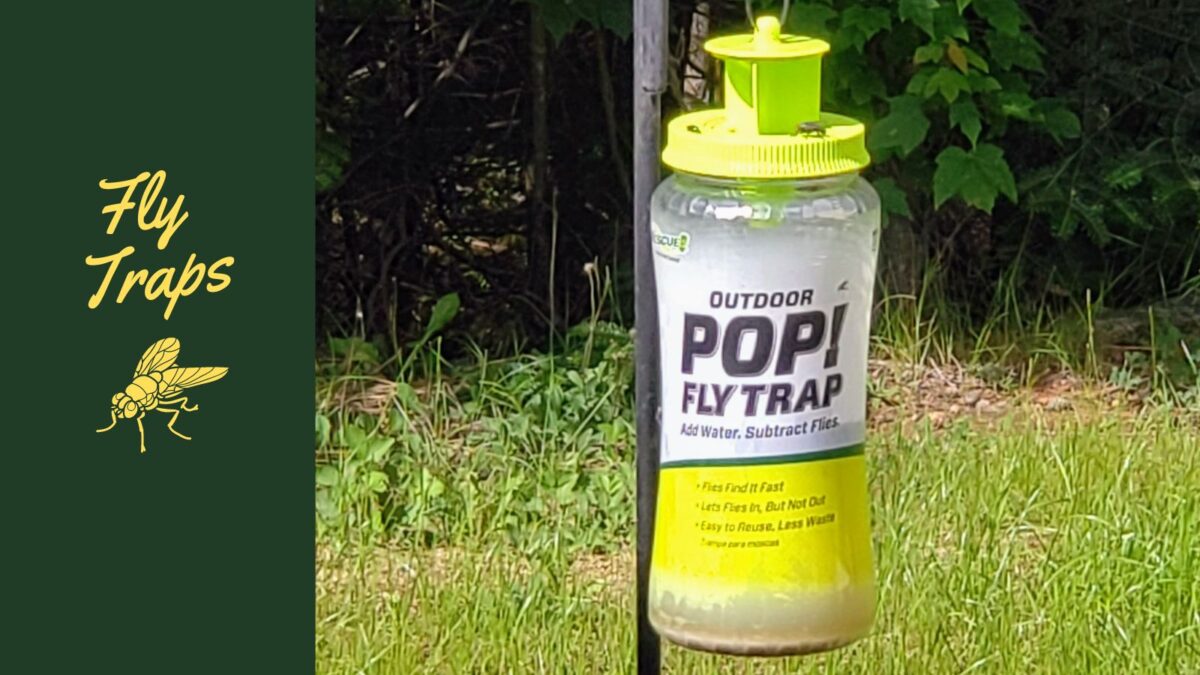
A simple DIY trap works well: Hang a dark-colored ball or balloon coated in a sticky substance (like Tanglefoot) in problem areas. The dark color draws them in, and they get stuck.
Even better for personal protection? The classic deer fly hat; add sticky tape, fly strips, or adhesive patches to the back or brim of a light-colored hat. It’s low-tech, surprisingly effective, and a game-changer during peak season when they swarm your head. My husband uses this when he is working outdoors.
Natural Methods: Limited Evidence
Many people look for natural ways to deal with deer flies. While some of these approaches are popular, the evidence that they reliably reduce bites is weak. They should be viewed as optional experiments rather than proven solutions.
Essential Oils: Oils such as eucalyptus, lavender, or citronella are sometimes suggested as repellents. A few people find the scent helpful, but there is little solid research showing they provide consistent protection against deer flies. Essential oils can also irritate skin or cause reactions in sunlight, so use caution and always dilute them properly. They should not replace a labeled insect repellent if you need real bite protection.
Apple Cider Vinegar Traps: Homemade vinegar traps are often recommended online, but they are designed for fruit flies, not deer flies. Deer flies are visual hunters attracted to movement, dark colors, and carbon dioxide, not vinegar scent. These traps are unlikely to make a meaningful difference outdoors.
Deer-Repellent Herbs: Planting rosemary, lavender, or mint can be nice for the garden, and some of these plants may deter certain insects. However, there is no strong evidence that they reduce adult deer fly activity around people. Don’t expect herbs to protect a patio, garden, or walking path.
Bottom line: Natural methods can be fun to try, but they are not reliable for reducing deer fly bites. For better results, focus on light-colored clothing, labeled repellents, head protection, and timing your outdoor activities.
How To Get Rid of Deer Flies in Maine with Commercial Products
Dealing with deer flies can be quite a nuisance, but luckily, many commercial products are available to help you get rid of these pesky insects. I’ve found them hard to see, whereas the mayflies were easy to spot.
From choosing the right repellent spray to considering deer fly traps and stickers, we’ve got you covered on how to get rid of deer flies.
Choose A Deer Fly Repellent Spray
When it comes to repelling deer flies, a good quality repellent spray can be your best friend. These sprays are designed to deter these bothersome insects, keeping them at bay and preventing them from landing on you.
Look for repellents that specifically mention deer flies on the label to ensure they are effective against this specific pest.
Follow the instructions on the product label for proper application and reapplication, as the spray’s effectiveness can wear off over time.
Consider Deer Fly Traps and Stickers
For heavier deer fly pressure, we rely on commercial sticky traps and hat stickers that really pull their weight. These visual traps use dark colors or shiny surfaces to attract the flies, then capture them on the sticky surface.
Hang larger traps near water sources, garden edges, or shaded spots where they like to congregate. For personal protection during walks or gardening, the simplest win is adding deer fly hat stickers or strips of fly tape to the back or brim of a light-colored hat; it’s cheap, effective, and we’ve saved many frustrating hours with this trick.
We’ve also learned that staying in breezy areas makes a huge difference. Deer flies are poor fliers in the wind, so we choose windy spots for gardening, take walks on exposed ridges, or set up a portable fan when working outside.
Keeping the yard mowed short and eliminating standing water and excess organic debris around the property also helps reduce their breeding sites.
Deer Fly Control Methods: What Works Best
| Method | Best Use | Expected Result | Important Limits |
|---|---|---|---|
| Light-colored long clothing | Hiking, gardening, yard work | Reduces bites significantly | Can feel hot in midsummer |
| DEET or Picaridin repellent | Exposed skin | Partial personal protection | Follow label; reapply as directed |
| Permethrin-treated clothing | Longer outdoor activities | Longer-lasting clothing barrier | Do not apply to skin |
| Sticky hat/head patches | Heavy deer fly pressure | Protects head & neck | Works best with light clothing |
| Head net/face veil | Severe activity near wetlands | Strong head & face protection | Can feel cumbersome |
| Portable fan / breezy spots | Stationary work (gardening, etc.) | Makes landing harder | Not useful while walking or hiking |
| Sticky traps (yard/campsite) | Patio, small yard, campsite | May reduce local adult flies | Does not eliminate the population |
| Essential oils | Optional experiment | Uncertain benefit | Not reliable; can irritate skin |
| Vinegar traps | Not recommended | Little to no effect | Designed for fruit flies, not deer flies |
How to Treat a Deer Fly Bite (and When to Seek Help)
Deer fly bites are painful and often leave itchy, swollen welts. Most reactions stay local and improve within a few days with simple care.
Immediate care:
- Gently wash the bite with soap and water.
- Apply a cold compress or ice pack wrapped in a cloth for 10–15 minutes to reduce swelling and discomfort.
- Avoid scratching to lower the risk of infection.
- Use an over-the-counter anti-itch cream or lotion according to the product label. If needed, ask a pharmacist whether an oral antihistamine is appropriate for you.
Watch for these warning signs: Increasing redness, warmth, pus, fever, a spreading rash, hives, wheezing, facial or throat swelling, or trouble breathing. These can signal a more serious reaction or secondary infection.
Seek medical care right away if you have breathing problems, swelling of the face or throat, faintness, or other signs of a severe allergic reaction (anaphylaxis). Call 911 in an emergency.
If you have a known allergy to insect bites, follow the action plan your clinician has given you. This may include carrying an epinephrine auto-injector.
Important note: This is general information only and is not personalized medical advice. Always check product labels and consult a healthcare professional for advice specific to your situation, especially for children, pregnancy, or if you take other medications.
Deer flies can rarely transmit diseases such as tularemia in some parts of the country, but this is uncommon. The vast majority of bites cause only local irritation.
Outdoor Activity Tips
When it comes to enjoying your rural area, you want to know how to get rid of deer flies to enjoy your time there. These pesky insects can quickly turn a pleasant outdoor experience into a frustrating one.
However, with a few simple tips, you can keep these annoying flies at bay and make the most of your time outside. Here are some more effective strategies to consider:
Cover Exposed Skin
One of the best ways to protect yourself from deer flies is to cover up any exposed skin. These insects are attracted to body heat and movement, so minimizing the area they can target is key.
Wear long sleeves, long pants, and socks to create a barrier between yourself and the flies. Opting for light-colored clothing, as deer flies are typically attracted to dark colors, is a great way to get rid of deer flies near you.
Stay In Breezy Areas
Deer flies are not strong fliers, so they usually avoid windy areas. When planning outdoor activities, choose locations that are naturally breezy or create your own wind by setting up fans or portable misters.
This will not only help keep the flies away but also provide some relief from the heat on hot summer days.
Have you heard of this tip for getting rid of deer flies before?
Keep Outdoor Spaces Clean
Deer flies are attracted to decaying organic matter, so it’s important to keep outdoor spaces clean and tidy. Remove any garbage, rotting vegetation, or standing water that may serve as breeding grounds for these insects.
Regularly mow your lawn and trim bushes to reduce the number of hiding spots for deer flies. Additionally, consider using odorless insect repellents in outdoor areas to deter them from approaching.
By following these simple tips, you can greatly reduce the annoyance caused by deer flies during your outdoor activities. Remember to cover up, seek out breezy areas, and maintain a clean outdoor environment.
With these strategies in place, you’ll be able to fully enjoy your time outside without the constant buzzing and biting of deer flies.
Conclusion: Reducing Deer Fly Bites in Rural Maine
You usually can’t eliminate deer flies when you live near wetlands, ponds, or streams, and that’s okay. The goal is to reduce bites and make outdoor time more enjoyable.
Start with the most reliable steps:
- Wear light-colored, long clothing.
- Use a labeled repellent (DEET or picaridin).
- Protect your head and neck with a sticky hat or head net.
- Time outdoor work for early morning or evening when possible.
- Use fans or breezy spots for stationary tasks.
Traps can help in small areas, but they won’t wipe out the local population. Natural options like essential oils have limited evidence and shouldn’t replace proven protection.
If you do get bitten, clean the area, use a cold compress, and watch for signs of a stronger reaction. Most bites stay local and improve in a few days.
With a few practical adjustments, you can spend more time outside in rural Maine with far less frustration. And when deer fly season winds down in early fall, watch for cluster flies looking for a warm spot to spend the winter. What’s worked best for you against deer flies? Share your tips in the comments.
Frequently Asked Questions About How To Get Rid of Deer Flies
Do deer flies bite more than once?
Yes. Female deer flies are persistent and will often return to the same person or animal after being swatted away.
What time of day are deer flies most active?
They are daytime biters and are usually worst from late morning through mid-afternoon on warm, calm days.
Can deer flies transmit diseases?
In rare cases, deer flies can transmit tularemia, but this is uncommon. Most bites only cause local pain, swelling, and itching.
Do mosquito repellents work on deer flies?
Repellents with DEET or picaridin can help reduce bites, but they are not as effective as they are against mosquitoes because deer flies hunt mainly by sight and movement.
Why do deer flies keep flying around my head?
They are strongly attracted to movement, dark colors, body heat, and carbon dioxide. The head and neck are common targets.
Can I get rid of deer flies by cleaning up my yard?
Usually not. Deer flies breed in wetlands, marshes, and saturated soil, often off your property. Cleaning up standing water and mowing may help a little with other pests, but it rarely eliminates deer flies.
Are essential oils effective against deer flies?
There is little reliable evidence that essential oils provide strong protection. They should not replace labeled insect repellents if you need real bite protection.
When should I see a doctor for a deer fly bite?
See a doctor if the bite becomes increasingly red, warm, or swollen, or if you develop fever, hives, trouble breathing, or facial/throat swelling. Call 911 for signs of a severe allergic reaction.
Disclosure: Some content on this Rural Area Life blog has been created with AI assistance and verified by me. Some links are affiliate links, from which I may earn a commission from qualifying purchases at no additional cost to you.

Lisa moved from Southern New England to the rural mountains of Maine in 2020 with her husband. Drawing from her hands-on experience with slower-paced rural living, she shares the beauty, honest realities, and simple pleasures of life in the Maine woods, along with their rural travels across the United States and abroad.