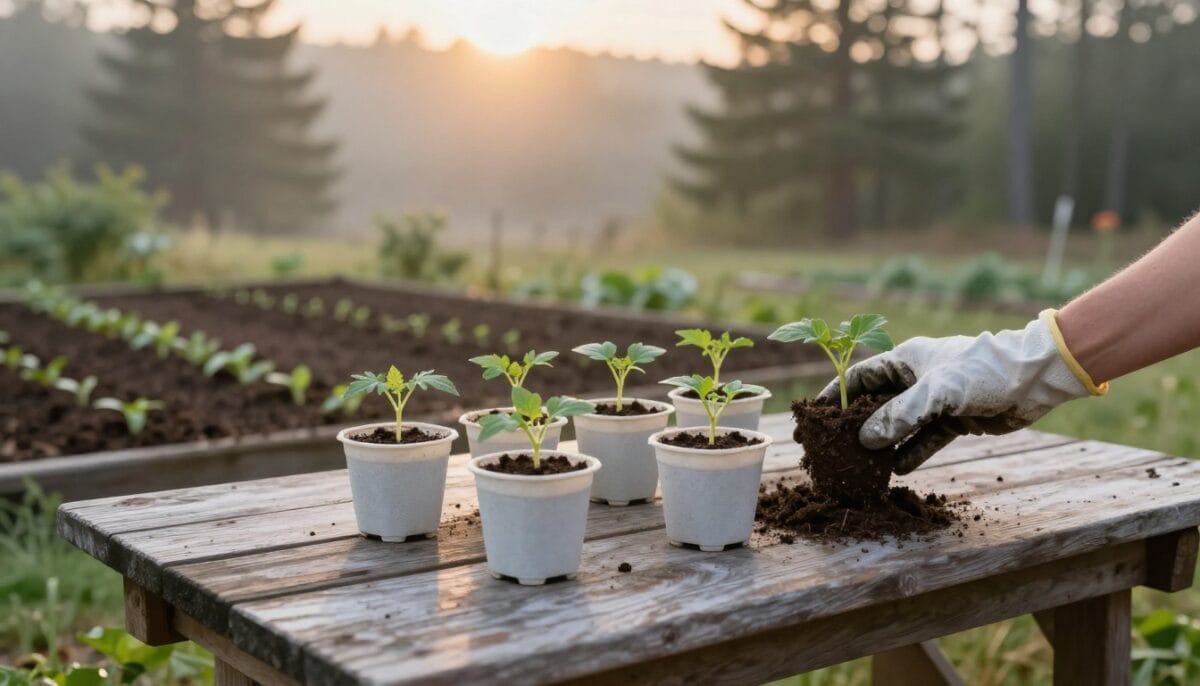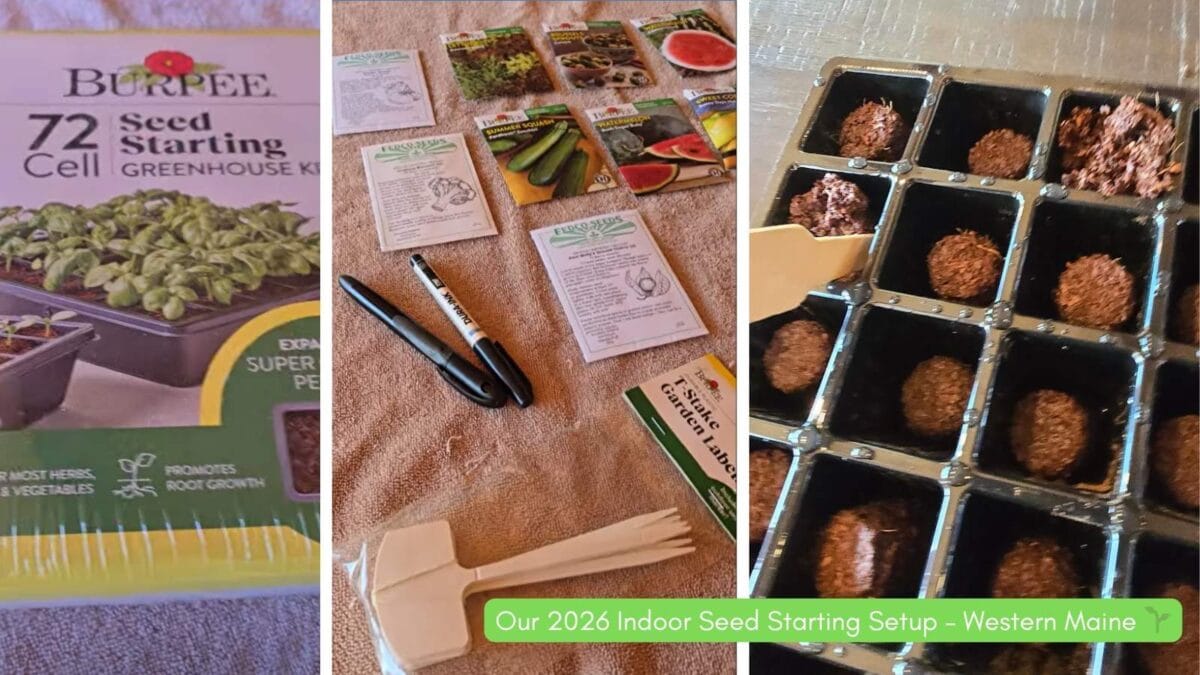
This week, we kicked off our 2026 indoor seed starting schedule for Western Maine. With snow still melting outside and nights that can still dip below freezing, starting seeds indoors is the best way we’ve found to get a real head start on our garden.
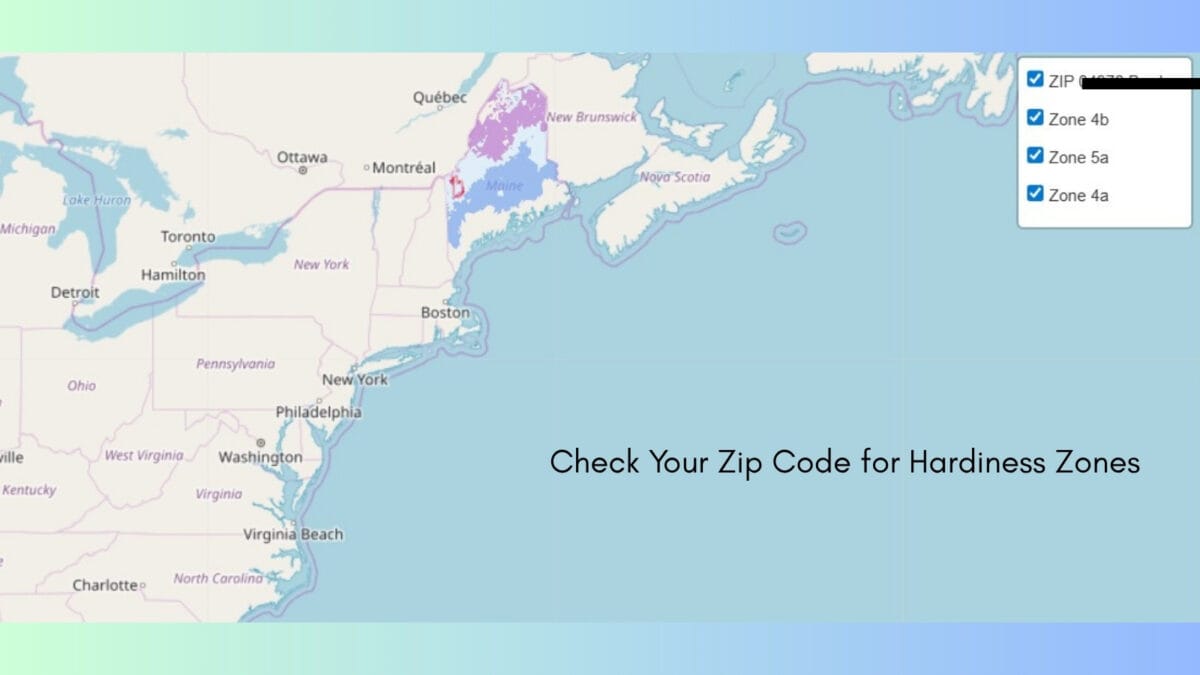
Living in Western Maine (Zone 4b/5a) means we have a short growing season and late last frost dates, so starting seeds indoors is essential if we want tomatoes, peppers, and zucchini before the first fall frost.
In this Rural Area Life post, I’m sharing our complete 2026 seed starting for another short season in Western Maine, including exact timing for tomatoes, peppers, zucchini, and more; plus the supplies we use, lessons we’ve learned, and plenty of real-life tips from our rural garden.
Whether you’re a beginner or a seasoned Maine gardener, I hope this helps you plan a more successful garden this year!
Quick Takeaways for Seed Starting in Western Maine
- Start seeds indoors to beat our short growing season — it’s essential in Zone 4b/5a.
- Zucchini should only be started 3–4 weeks before the last frost (mid-to-late April or early May) to avoid root-bound plants.
- Use fresh seeds every year, as old seeds have given us poor germination in the past.
- The Burpee 72-cell Seed Starting Kit is one of our favorite tools because it’s compact and lets us start extra plants.
- Label everything clearly and use bottom heat and grow lights to improve germination in cold houses.
- Don’t rush transplanting — wait until frost risk is truly gone (usually mid-to-late May).
- Gardening in Western Maine takes patience and learning from mistakes — but the results are worth it!
Our Growing Zone & Frost Dates in Western Maine
In Western Maine, the frost dates (average last frost ~ May 15–25) vary depending on the exact spot and weather conditions.
We recommend checking your own zip code on Almanac.com or PlantMaps.com. Check the current season’s forecast when you plan your own schedule.
We don’t always follow the schedule below when we are traveling during mud season. Sometimes we start a little later in late April or even early May.
| Crop | When We Start Indoors | Weeks Before Last Frost | Transplant Outdoors |
|---|---|---|---|
| Zucchini | Mid-to-Late April | 3–4 weeks | Late May – Early June |
| Peppers | Early–Mid March | 8–10 weeks | Late May–Early June |
| Tomatoes | Mid–Late March | 6–8 weeks | Late May–Early June |
| Eggplant | Mid–Late March | 6–8 weeks | Early June |
| Broccoli / Cabbage | Early–Mid April | 4–6 weeks | Mid-May |
| Herbs (Basil, etc.) | Mid–Late April | 4–6 weeks | Early June |
| Flowers (Marigolds, etc.) | Late March – April | Varies | Late May |
Why this timing for Zucchini in Western Maine?
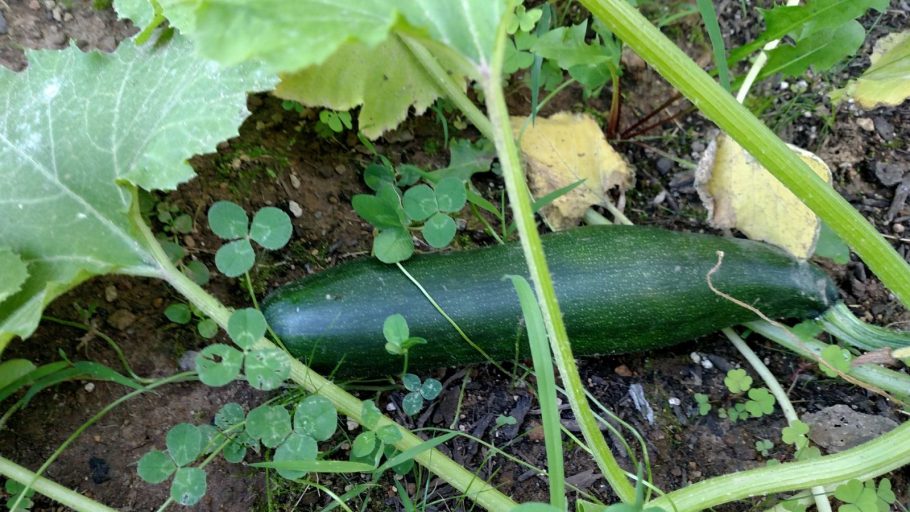
- Zucchini is a warm-season crop that grows very quickly.
- Starting too early indoors leads to big, root-bound plants that don’t transplant well.
- 3–4 weeks before your average last frost (mid-May) is ideal for Zone 4b/5a.
- Many Maine gardeners direct-seed zucchini after the soil warms up, but starting a few indoors gives you an earlier harvest.
Our Supplies & Setup
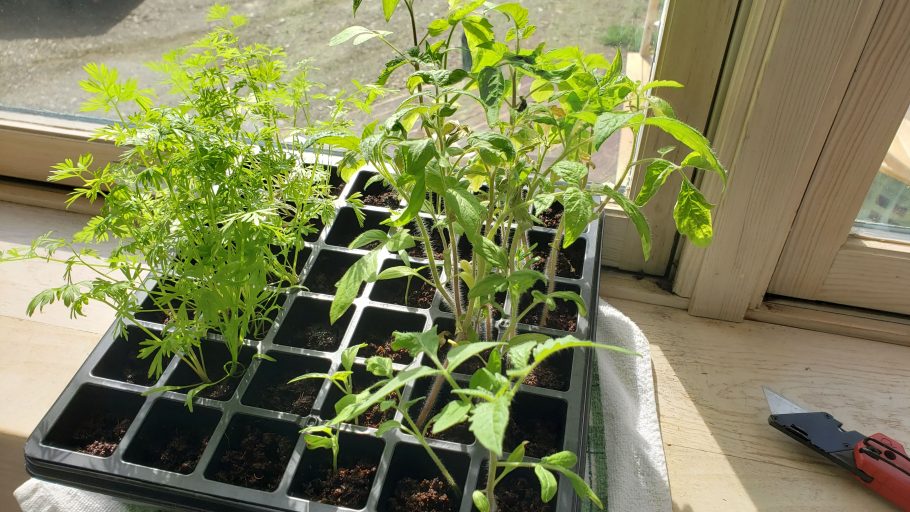
You can see the supplies we’re using this year in the video above. We like the Burpee 72-cell Seed Starting Greenhouse Kit because it lets us start more plants than we need (we always lose a few).
We also use fresh seed packets every year after having poor results with old seeds in the past.
General Timing Guidelines for the Rest of Our Schedule
We base the rest of our timings on how long each crop needs to grow before it’s ready to go outside. Tomatoes, peppers, and eggplant need the longest head start (6–10 weeks) because they take longer to mature and are very sensitive to cold. Broccoli, cabbage, and herbs need less time (4–6 weeks), while flowers are more flexible.
This schedule has been refined over several years of gardening in Western Maine. It helps us maximize our short growing season while avoiding the disappointment of losing seedlings to late spring frosts.
Step-by-Step: How We Start Seeds Indoors
In the short video above, I walk through the tools and supplies we use to get our garden started indoors.
We begin by gathering everything and putting it on a table with a towel under it so we don’t get the table dirty or wet.
- The Burpee 72-cell kit.
- Fresh seed packets (including a new pollinator mix this year).
- Plant labels.
- Permanent markers.
- Garden stakes for later.
We fill the cells with moist seed-starting mix, plant the seeds at the proper depth, label each row clearly, and set up the trays with bottom heat and grow lights. (This year, the labels did not come with the kit!)
This kit has become one of our favorite tools: it’s compact, effective, and well-suited for our short growing season.
Common Mistakes We’ve Made (and How to Avoid Them)
Moving to Western Maine from Rhode Island taught us a lot. Some of the mistakes we’ve made over the years include:
- Planting seedlings outside too early.
- Overwatering or underwatering seedlings.
- Using old seeds with low germination rates.
- Not addressing poor pollination (we now add pollinator flowers to help our tomatoes).
What’s Next: Hardening Off & Transplanting
Once the forecast shows no more frost risk, we’ll begin hardening off the seedlings and transplanting them into bigger pots or directly into the garden.
If the plants get too big before it’s safe to go outside, we’ll move them into larger containers indoors and may add a bit of plant food if growth is slow.
Final Thoughts:
We hope these tips and our real 2026 schedule help you grow a productive garden even in a short-season area like Western Maine. Gardening here is definitely a learning process, but it’s so rewarding!
Want to see how this year’s plan actually played out? Check our mid-August results in the Western Maine garden update.
Curious how these spring starts actually performed once they hit the garden? See our honest mid-August Western Maine garden update.
Have you started your seeds yet? Drop your zone or schedule in the comments: We’d love to hear how you do it!
— Lisa (and family) Rural Area Life
FAQ – Seed Starting in Western Maine
When is the average last frost date in Western Maine?
Usually between May 15–25, but it can vary by elevation and microclimate. Always check your specific zip code on Almanac.com.
Can I direct seed zucchini instead of starting indoors?
Yes! Many Maine gardeners direct-seed zucchini after the soil warms up in late May. Starting a few indoors just gives you an earlier harvest.
What’s the best seed starting mix to use?
We use a lightweight, sterile seed starting mix (not regular garden soil). It helps prevent damping off and gives tiny roots the best start.
How often should I water the seedlings?
Keep the soil moist but not soggy. We mist the top daily and water from the bottom when the trays feel light. Overwatering is one of the most common beginner mistakes.
Is it too late to start seeds now (end of April)?
Not at all! You can still start zucchini, herbs, broccoli, cabbage, and many flowers right now. Tomatoes and peppers are best started earlier, but it’s not too late if you get them under lights soon.
What should I do if my seedlings get too tall before it’s safe to plant outside?
Transplant them into larger pots and continue growing them indoors, or start hardening them off on warmer days. You can also bury the leggy stems deeper when transplanting.

Lisa moved from Southern New England to the rural mountains of Maine in 2020 with her husband. Drawing from her hands-on experience with slower-paced rural living, she shares the beauty, honest realities, and simple pleasures of life in the Maine woods, along with their rural travels across the United States and abroad.