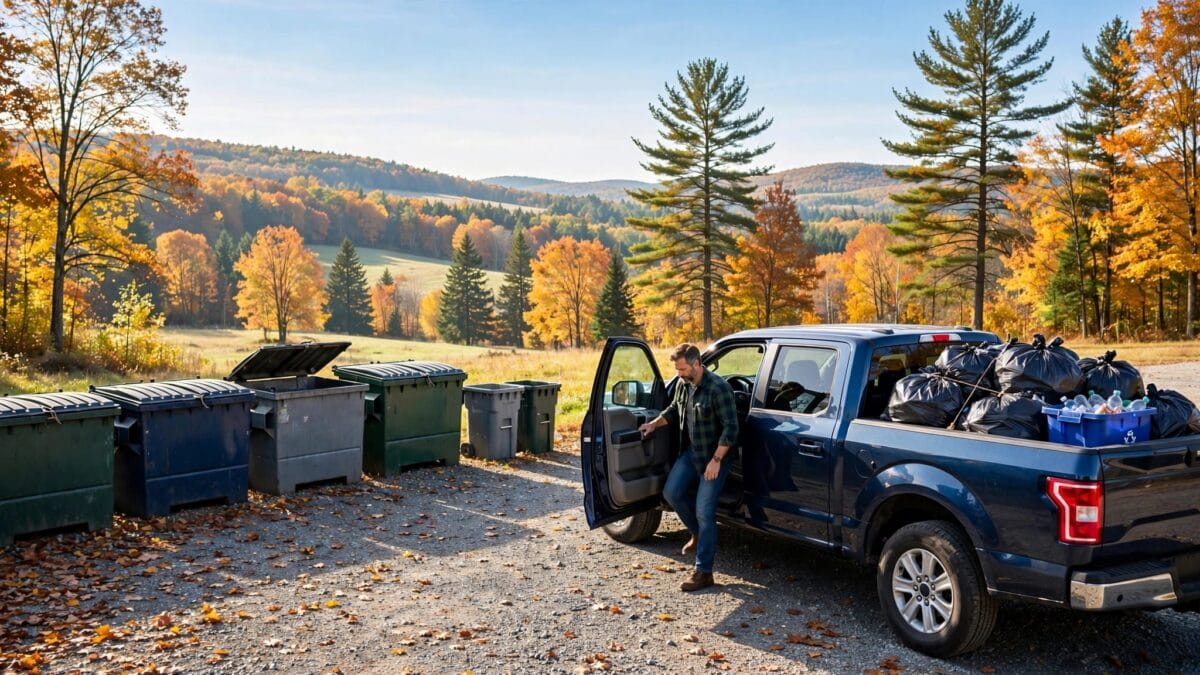
We drive about seven miles to the transfer facility to drop off our household trash, so knowing the local rules prevents a wasted trip. Using a rural transfer station is manageable once you understand access and sorting requirements.
Maine towns set their own schedules, fees, and accepted-material rules. If you’re moving somewhere without curbside collection, taking out the trash becomes an errand that needs space in the car and a place on the calendar.
Start with the facility that serves your address, then prepare a load you can transport safely and unload without having to dig through everything.
Key Takeaways
- The closest rural transfer station isn’t automatically available to your household; access depends on the community or regional arrangement.
- Residential hours, vehicle permits, and disposal charges vary among rural towns in Maine.
- Required bags, stickers, or tickets may need to be purchased before you reach the station.
- Keep ordinary trash contained and separate recyclables, bulky items, and materials requiring special handling.
- Secure the entire load, save directions offline, and leave enough time to unload before closing.
How to Get Household Trash to a Rural Maine Transfer Station
For a roughly seven-mile trip, handle access and payment first. Loading comes afterward, because the right destination and disposal method determine what belongs in the vehicle.
Confirm you can use the station before you go
A nearby rural transfer station facility may serve one town or several communities. Eligibility can depend on residency, property ownership, or a regional agreement.
For example, Freeport’s facility sticker information lists annual stickers for Freeport residents and users from Pownal, Durham, and North Yarmouth. That arrangement doesn’t give every Maine resident access.
Your town’s residential instructions should identify the serving facility, residency documents, and vehicle-permit requirements. The useful details include whether each vehicle needs a sticker and how many your household can receive.
Keep the permit with the vehicle it covers. A sticker on one family car doesn’t automatically authorize the use of a borrowed pickup, even when both vehicles carry trash from the same home.
Check hours, fees, and how to pay at Rural Transfer Station
Use the residential schedule rather than assuming commercial hours apply. Also account for holiday closures and seasonal changes when choosing your trash day.
Payment systems differ. A facility may charge through designated bags, bag stickers, disposal tickets, individual-item fees, or weight.
Falmouth, for example, lists $5 disposal tickets that aren’t sold at the transfer station. Its household waste rules use yellow bags from the town or disposal tickets. Those are Falmouth’s requirements, not statewide prices or procedures.
Put any required purchase ahead of the rural transfer station stop. Also distinguish a vehicle-access sticker from a sticker that pays for a bag of trash; they have different purposes.
For a first visit, carry the required residency paperwork and payment materials together. That keeps the gate conversation separate from searching under the seats.
Sort and secure your trash before the seven-mile drive
Prepare the load while everything is still easy to reach. Tie trash bags closed, protect the vehicle against leaks, and separate materials before lifting them aboard.
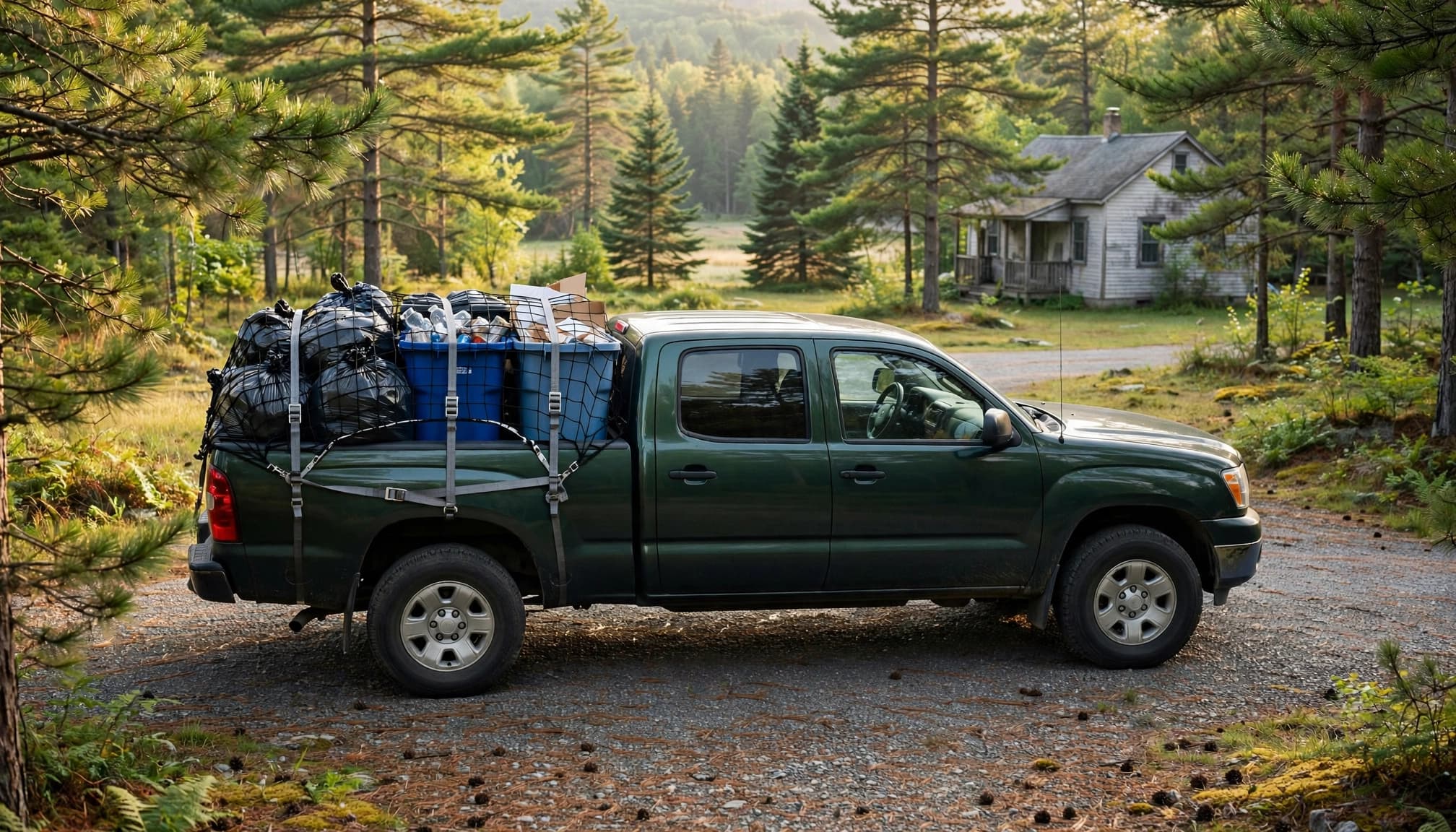
Finally, secure the whole load. Use suitable restraints and a cover for an open truck bed or trailer. Maine’s litter law addresses litter discarded from vehicles, and both the operator and the person discarding it can be held responsible.
(If you want the full details on how that works in practice, we covered it here: Who Is Responsible for Littering from a Motor Vehicle?)
Separate recycling and items that need special handling
Recycling instructions are provided by the receiving rural transfer station facility. Some materials require separate containers, and accepted packaging must be empty and free of food residue.
Ellsworth, for example, requires accepted recyclables to be free of debris and their original contents. Leaving a half-full container among the recycling creates an avoidable mess during transport.
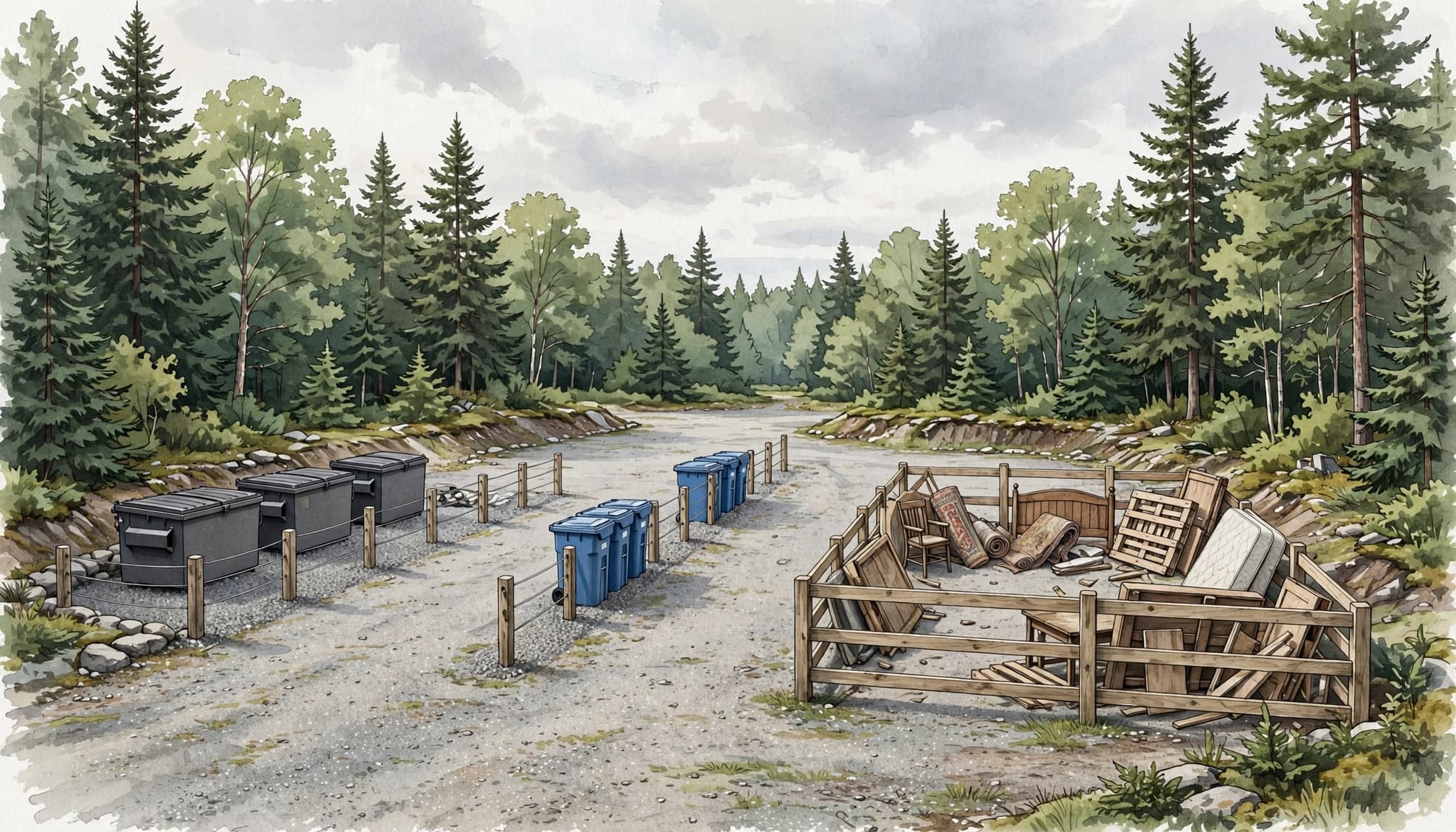
Keep bulky furniture, appliances, construction debris, tires, batteries, propane cylinders, and yard waste out of the ordinary bagged-trash category. Each can involve a separate disposal location or charge.
Acceptance also differs. Old Town lists appliances and demolition debris among accepted materials, while Falmouth excludes several construction materials. An open space in the truck doesn’t mean an item belongs in that day’s load.
Use manageable containers rather than bags so heavy you can’t safely lift them.
Do not assume hazardous waste is accepted on a regular day
Household hazardous waste can require a collection event or a separate disposal route. Paint, fuel, pesticides, and unidentified chemicals shouldn’t disappear into an ordinary trash bag.
For example, Harpswell’s 2026 disposal guide lists hazardous waste, gasoline, paint, and other fuels among prohibited materials.
Keep chemicals in their original, labeled containers, and never combine leftovers to save space. A leaking or unidentified container needs a safe disposal plan before transportation.
Finally, secure the whole load. Use suitable restraints and a cover for an open truck bed or trailer. Maine’s litter law addresses litter discarded from vehicles, and both the operator and the person discarding it can be held responsible.
Make unloading simple and avoid a wasted trip
Arrange the vehicle so each disposal category is reachable without moving the entire load. Keep your permit or tickets accessible, rather than buried beneath recycling containers.
Save the facility’s address, directions, and disposal instructions on your phone before leaving home. A screenshot or a downloaded document remains useful where rural cell service is unreliable. The same goes for winter conditions; if snow or ice is in the forecast, we treat even this short run the way we treat any rural drive. More on that here: Rural Winters: 7 Safer Driving Tips On Snowy Back Roads.
Keep the opening schedule with those directions. For example, Fryeburg’s transfer station brochure lists Thursday as closed. A familiar-looking weekday can still be the wrong day for a trash run.
Give yourself time to unload before closing, especially on a first visit. Seven miles each way means roughly 14 miles of driving before adding any detour for forgotten supplies.
At the station, slow down and follow posted traffic directions. Staff may direct household trash and recycling to different areas, so pause for instructions before opening the vehicle.
Ask an attendant where an unfamiliar item belongs. That’s safer than leaving it beside a container and hoping someone else handles it. Never reach into equipment or enter a restricted unloading area.
Also remember that staff directions don’t guarantee lifting assistance. Bring help for something you can’t move safely, and don’t make a heavy appliance part of an otherwise routine bagged-trash run.
Before pulling away, close the tailgate or hatch and secure any containers returning home. Loose bags, lids, and empty bins still need restraint.
Once home, return reusable bins to their storage spot and note supplies running low. Keeping disposal tickets or approved bags with your trash supplies makes the next trip simpler without relying on memory.
Frequently Asked Questions
Can I use a Rural transfer station in a nearby Maine town?
Only if that facility’s access rules include your household. Some serve residents or property owners of named communities, while others operate through regional agreements. Paying taxes somewhere in Maine doesn’t create statewide disposal access, and a nearby town’s station may have no provision for outside users.
Do I need a sticker or permit to bring household trash?
Some facilities require a vehicle permit, but the rules aren’t uniform. Hermon’s 2026 transfer station guidance lists a $10 sticker placed inside the transporting vehicle’s windshield and excludes commercial or contractor use. Residency documentation, sticker quantities, and requirements for additional vehicles remain local matters.
Can I buy trash bags or disposal tickets at the station?
Don’t count on an on-site sale. Some towns distribute required bags, stickers, or tickets through the town office or participating stores instead. Buying the required supplies before loading also avoids leaving a car full of trash parked while you make a second stop.
Can I bring old appliances or bulky household items?
A station may accept them separately, impose extra charges, or exclude certain items altogether. Size and weight can affect the charge, while refrigerators and other cooling appliances may have additional handling requirements. Identify the exact item rather than treating every large object as ordinary household trash.
What should I do with household hazardous waste?
Keep it separate until you have an accepted collection or drop-off arrangement. Ellsworth’s household hazardous waste policy limits acceptance to its annual Household Hazardous Waste & Universal Waste Collection event. Regular transfer-station opening hours don’t create an everyday hazardous-waste service, so leave those materials out of a routine trash load.
Make the Seven-Mile Trip Part of Your Routine
Bringing household trash to a rural transfer station becomes easier when the access requirements and payment system are settled before loading. Then you can focus on containing the trash, keeping disposal categories separate, and securing everything for the road.
Our roughly seven-mile drive is one of those ordinary responsibilities that comes with rural life. Your town’s published guidance provides the local details, while a repeatable loading routine takes much of the fuss out of the errand.
Keep the next trip ready with disposal supplies in one place and directions saved offline. A little preparation at home means less unloading trouble and fewer unnecessary miles.
Disclosure: Parts of this post were drafted with AI assistance and then reviewed and edited by me based on local observations and public information.

Lisa moved from Southern New England to the rural mountains of Maine in 2020 with her husband. Drawing from her hands-on experience with slower-paced rural living, she shares the beauty, honest realities, and simple pleasures of life in the Maine woods, along with their rural travels across the United States and abroad.