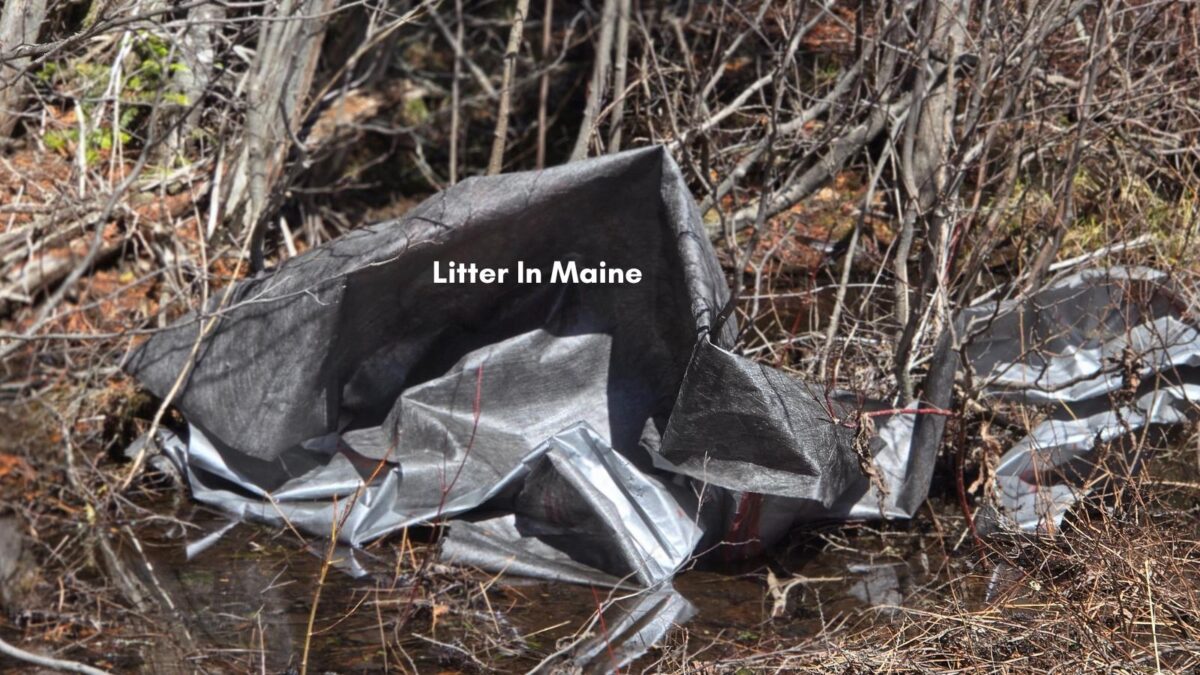
Motor vehicle litter is an eyesore. Have you ever wondered who is responsible for littering from a motor vehicle? I was thinking that on my recent walk along the roadway.
It made me sad to see litter along our property. Understanding this responsibility is crucial not only for maintaining our roads and landscapes but also for the well-being of our community. We want the areas we live in to look nice and be clean.
In this post, I’ll explore who is responsible for littering from a motor vehicle, the implications of their actions, and what measures can be taken to address litterbugs throwing things out of vehicle windows.
Key Takeaways
- Responsibility for littering from a motor vehicle usually falls on the driver, since the driver controls the car and can be ticketed even when a passenger throws the litter.
- Passengers can also be held responsible for littering from a vehicle when officers, cameras, or witnesses clearly identify who threw the trash.
- There is no direct federal law that fines drivers or passengers for littering from a vehicle, but federal environmental rules support state and local litter laws.
- State and local governments set the real penalties for littering from vehicles, which can include fines, community service, required education, and, in some places, possible vehicle impoundment.
- Reporting littering with license plate details, time, location, and a description of the litter helps authorities act and supports cleaner, safer rural and urban roads.
The Legal Perspective
Littering from motor vehicles can seem like a minor inconvenience, but it poses serious risks to our animals and ecosystem. I was admiring the beautiful lupine flowers when I spotted the litter.
It got me thinking, “Who is Responsible for littering from a Motor Vehicle?”
Laws and regulations at both the federal and local levels aim to combat this issue, ensuring that our roads remain clean and our natural landscapes remain unspoiled.
No Littering Signs: Who is Responsible for Littering from a Motor Vehicle?
I realized later, after my walk, that we might need some littering signs to let drivers know about the fines. Would that stop them from littering from their motor vehicle?
It appears that most people are focusing on other issues, such as regulations on the maximum weight that large trucks can carry.

Federal Laws and Regulations: Who is Responsible for Littering from a Motor Vehicle?
At the federal level, there are no laws addressing littering from motor vehicles. However, broader environmental regulations cover certain aspects of littering.
For instance, the Environmental Protection Agency (EPA) enforces laws under the Resource Conservation and Recovery Act (RCRA) that regulate the proper disposal of waste. While these laws primarily target larger-scale waste management, they also set the stage for states and municipalities to enforce more specific regulations.
Although no federal law directly mandates penalties for littering from a vehicle, the overarching principles of environmental protection established by federal agencies provide a foundation.
The Clean Water Act, for instance, indirectly targets litter that can contaminate water bodies—an issue often exacerbated by roadside littering. So, who is responsible for littering from a motor vehicle today?
State and Local Laws
The real action happens at the state and local levels. Many states have enacted specific laws to address vehicle-related littering. Here are a few examples:
- California: Both drivers and passengers can be fined for littering from a vehicle. The fines can range from $100 to $1,000, depending on the severity and frequency of the offense. California also has community service requirements that may include picking up litter.
- Texas: Texas takes a stringent approach, with fines ranging from $500 to $2,000 for repeat offenders. Additionally, Texas employs a community service component, often focused on environmental cleanup projects.
- Maine: A. A person who violates subsection 1 commits a civil violation for which a fine of not less than $100 nor more than $500 may be adjudged. Additionally, a person who violates subsection 1 violates the Maine Litter Control Act, Title 17, Chapter 80, and is subject to the penalties outlined in that Act.
Local municipalities often add another layer of regulations, sometimes enforcing even stricter penalties. For example:
- Seattle, Washington: Seattle’s local laws include hefty fines and even vehicle impoundment in severe cases of littering from vehicles. The city also runs regular litter patrols to catch offenders in the act.
- Atlanta, Georgia: Littering from a vehicle can result in fines, jail time, and mandatory participation in environmental education programs. The city places a strong focus on educating its residents about the impacts of litter.
By understanding these laws and how they are enforced, we can better appreciate the gravity of motor vehicle littering.
Adherence to these regulations not only avoids penalties but also contributes to a cleaner, healthier environment for everyone.
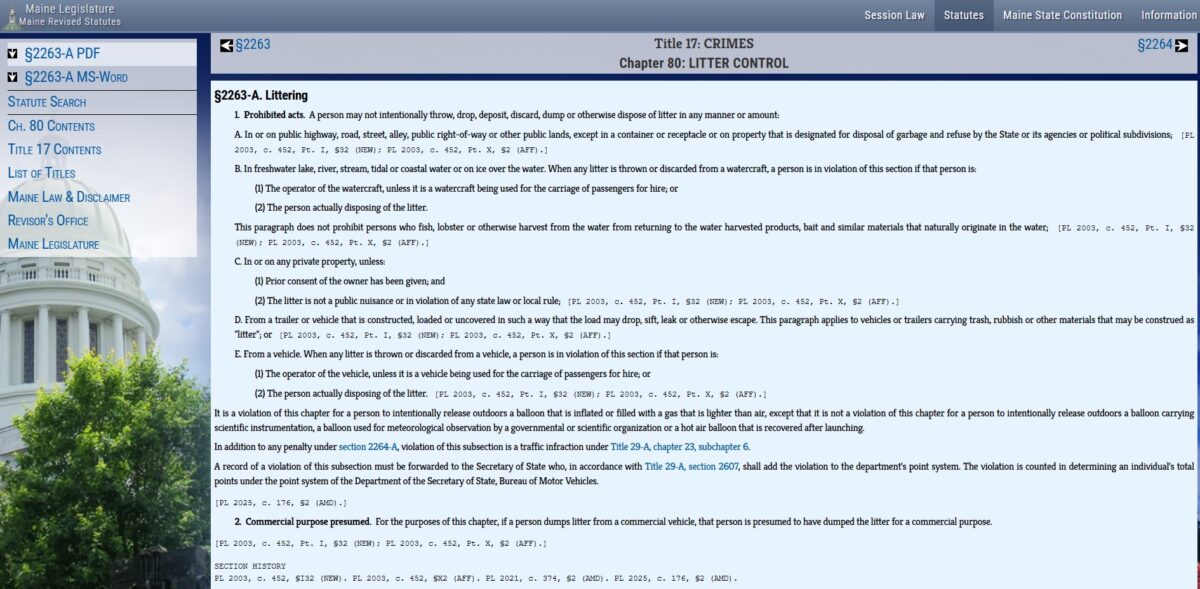
Maine Litter Laws – Official Statute (§2263-A)
Maine’s Litter Control law is very clear on vehicles:
§2263-A. Littering E. From a vehicle. When any litter is thrown or discarded from a vehicle, a person violates this section if that person is: (1) the operator of the vehicle, unless it is a vehicle being used for the carriage of passengers for hire, or (2) the person actually disposing of the litter.
Source: Maine Revised Statutes, Title 17 §2263-A
Key Takeaways from Maine Law:
- Both the driver and the person who actually threw the litter can be held responsible.
- Fines range from $100 to $500.
- It’s a traffic infraction that can add points to your driver’s license.
Who is Held Responsible in Littering Incidents?
When it comes to littering from a motor vehicle, determining who is responsible can be somewhat complicated. It’s essential to understand whether the driver, the passenger, or both parties are held accountable.
Let’s break it down: Who is responsible for littering from a motor vehicle?
Driver Responsibility
In many cases, the driver is seen as the primary point of contact for any actions taken in their vehicle. This includes littering.
Imagine driving down the road, and a soda can flies out of the car window. Who gets the ticket? More often than not, it’s the driver.
- Ultimate Control: Since the driver is in charge of the vehicle, they are typically responsible for maintaining order and ensuring passengers follow the rules, including refraining from littering.
- Visibility to Law Enforcement: When a law enforcement officer witnesses littering in a vehicle, they usually pull the driver over. The assumption is that the driver has control and can be cited more easily.
- Legal Precedents: In many places, laws are specifically written to hold drivers accountable. For example:
- In California, laws stipulate that drivers can be fined for throwing litter from their vehicles, regardless of who is responsible.
- Similarly, in New York, the driver can be fined and possibly face jail time if someone in their vehicle is caught littering.
Passenger Responsibility
But what if the passenger is the one who tossed the trash out? That’s where things get a bit more complicated for determining who is responsible for littering from a motor vehicle.
- Direct Action: If it’s clear that a passenger is the one littering, then the passenger can be held accountable. Officers will often ask to identify the person who threw the item.
- Shared Responsibility: In some jurisdictions, both the driver and the passenger who litter may be fined. The idea is that both were involved in the act: the passenger threw the trash, and the driver didn’t stop them.
- Cameras and Witnesses: With the rise of dash cams and roadside cameras, identifying the actual person responsible becomes easier. More evidence means an accurate assignment of responsibility.
- Minor Passengers: Special rules often apply to minors. In many cases, the driver (usually the guardian) will still be held responsible, as they are expected to oversee the actions of underage passengers.
Understanding whether the driver or passenger is responsible for littering from a motor vehicle reveals how laws and enforcement work together to tackle this environmental problem.
Recognizing this can help us be more mindful and encourage positive behaviors when traveling by car.
Consequences of Littering from Motor Vehicles
Littering from motor vehicles is not just an act of negligence; it carries dire consequences across both legal and environmental realms. Let’s explore these impacts in detail.
Legal Penalties
When you throw trash out of your car window, you’re not only making the road look ugly. However, you are also breaking the law.
Different states have varying penalties, and the consequences can be severe.
It’s easy to assume that one small piece of trash can’t do much harm. However, littering from motor vehicles can have significant environmental repercussions.
- Wildlife Harm: Animals often mistake litter for food. Eating plastic, metal, or other debris can cause serious health issues or even death for wildlife. Imagine a turtle mistaking a plastic bag for a jellyfish—it’s not a good outcome.
- Water Pollution: Litter from roads often ends up in storm drains, which lead to rivers, lakes, and oceans. Pollutants, especially plastics, can severely damage aquatic ecosystems. For instance, soda cans and plastic wrappers can take hundreds of years to decompose, contaminating water bodies and harming aquatic life for generations.
- Soil Contamination: Chemicals from the litter can leak into the soil, affecting plant life. Polluted soil can inhibit plant growth, impacting agriculture and natural vegetation, and making it more difficult for plants to establish roots and flourish.
- Aesthetic Degradation: Beauty matters too. Litter makes parks, beaches, and highways unsightly. Our natural landscapes are treasures, and littering tarnishes their beauty. Imagine going for a hike and finding trash at every turn; it detracts from the experience and diminishes the area’s natural charm.
- Fire Hazards: Certain types of litter, such as glass bottles, can focus sunlight and ignite fires, especially in dry, grassy areas. This can lead to devastating wildfires, causing property destruction and endangering lives and wildlife.
Therefore, while tossing a wrapper or a soda can out of your car window might seem minor, the consequences are far-reaching and severe. Legal penalties can significantly impact your wallet, and the environmental consequences can harm our planet for years to come.
Responsible behavior is essential for preserving our environment and avoiding the harsh penalties that come with littering from motor vehicles.
How to Report Littering from a Motor Vehicle
Reporting littering from a motor vehicle can help keep our roads and environment clean. It’s easier than you might think and makes a real difference.
Here’s how you can do your part when finding out who is responsible for littering from a motor vehicle.
Hotlines and Reporting Tools For Litter
Most states and local municipalities offer various ways to report littering from a motor vehicle:
- Mobile Apps: Some states and local governments have developed mobile apps to streamline reporting. In Maine, you can report violators by calling 1-800-ALERT-US (1-800-253-7887)
- Clean Swell: An app that lets you report littering and track your contributions to cleaning efforts.
- Litterati: Another app where you can report litter by snapping a photo and tagging its location.
Using these tools, you can immediately report littering and help authorities take action.
Information Needed for Reporting
When you decide to report someone littering from a motor vehicle, you’ll need to provide specific details to help authorities handle the situation efficiently:
- Vehicle Description: The make, model, color, and vehicle type (e.g., sedan, SUV) are crucial. For instance, was it a red Toyota Camry or a blue Ford F-150?
- License Plate Number: This is the most critical piece of information. Without the license plate number, authorities may struggle to identify the offender.
- Location and Time: Note the exact location where the littering occurred, including the street name, highway number, or any nearby landmarks. Include the date and time as well.
- Description of Litter: What kind of litter was thrown from the vehicle? Was it a cigarette butt, a plastic bag, a soda can, or something else? Describing the litter helps in understanding the severity of the offense.
- Witness Information: If you can, provide your contact details. This helps authorities follow up on any clarifications that may be needed. Government agencies often keep witness information confidential to protect your privacy.
By providing complete and accurate information, you can significantly help stop motor vehicle littering. Being detailed in your report enables authorities to respond more efficiently, resulting in cleaner, safer roads for everyone.
Taking action against littering isn’t just about following the law; it’s about taking pride in our communities. So next time you see someone litter from a vehicle, don’t just fume about it, report it.
Preventative Measures Against Littering from Vehicles
Preventing litter from motor vehicles is crucial for maintaining the cleanliness and beauty of our roads, parks, and natural landscapes. Here are some key strategies to stop littering before it happens.
In rural Maine, many residents do regular roadside cleanups — especially after mud season when trash washes out.
Awareness and Education Campaigns
Understanding the significance of public awareness and education is vital to curbing vehicle littering. When more people know about the impacts of littering, they are less likely to toss trash out of their cars.
- Public Campaigns: Governments and non-profits often run campaigns to educate the public on the hazards of littering. Slogans like “Don’t Mess with Texas” and “Keep America Beautiful” have made a lasting impression.
- School Programs: Starting education early can create lifelong habits. School programs teach children about the environment and the importance of not littering. Imagine a classroom where kids learn how one piece of litter can harm an entire ecosystem – the lessons stick.
- Social Media Outreach: Social platforms can quickly spread messages. Sharing videos, infographics, and stories about the impacts of littering can reach thousands, if not millions, of people. Hashtags like #StopLittering and #KeepItClean can help raise awareness.
- Community Events: Organize or participate in community clean-ups and educational workshops. These events not only clean up litter but also educate participants on how to prevent future littering.
Vehicle Cleanliness Tips
Keeping your car clean is one of the simplest ways to avoid littering. Here are practical tips to ensure your vehicle stays tidy and litter-free:
- Use Car Trash Bags: Invest in a small trash bag or container specifically designed for cars. This way, you always have a place to put your rubbish until you can dispose of it properly.
- Clean Regularly: Make it a habit to clean your car at least once a week. Regular maintenance prevents the build-up of trash and clutter. Imagine cleaning out your car on a Sunday morning—it sets a good tone for the week.
- Avoid Food and Drinks: If possible, do not eat or drink in your car. Spills and wrappers create an unnecessary mess. If you must eat on the go, use reusable containers and take all waste with you when you leave the vehicle.
- Recycle: Keep a separate bag for recyclables, such as bottles and cans. Not only does this prevent littering, but it also helps the environment by ensuring proper waste disposal and recycling.
- Clear Out Before a Trip: Before embarking on a long drive, remove any unnecessary items from your car. A clutter-free vehicle is less likely to accumulate litter.
Community Involvement: To learn who is responsible for littering from a motor vehicle
Community initiatives play a crucial role in reducing vehicle-related littering. By working together, communities can create a cleaner, healthier environment for everyone.
- Adopt-a-Road Programs: These programs encourage local groups to take responsibility for cleaning a stretch of road. Participants gain a sense of ownership and pride, making them less likely to litter and more likely to prevent others from doing so.
- Local Ordinances: Advocate for stronger local laws and regulations against littering. Attend town meetings and support policies that promote cleanliness and environmental protection.
- Neighborhood Watch: Form or join a neighborhood watch group focused on preventing littering. These groups can organize regular patrols and report any incidents of littering they witness.
- Volunteering: Simple volunteer work at clean-up events can make a significant difference. The more people get involved, the cleaner the community becomes.
- Business Partnerships: Partner with local businesses to sponsor clean-up events or provide resources for community education campaigns. Businesses benefit from a cleaner environment, which can attract more customers.
By taking these steps at both the individual and community levels, we can significantly reduce motor vehicle littering. Public awareness, personal responsibility, and community action all play vital roles in maintaining clean and beautiful roads.
Conclusion: Who Is Responsible For Littering From A Motor Vehicle?
Identifying who is responsible for littering from a motor vehicle enables us to address this troubling issue more effectively. Both drivers and passengers must understand their roles and the potential legal consequences. From hefty fines to possible jail time, the stakes are high. The impact is equally severe, affecting wildlife, water quality, and the beauty of our natural landscapes.
Take action today—educate yourself and others, report littering incidents, and practice mindful habits to prevent littering from your vehicle.
Have you noticed an increase in litter along the roads in your rural area?
Frequently Asked Questions About Littering From a Motor Vehicle
Who is usually responsible for littering from a motor vehicle, the driver or the passenger?
In many states, the driver is usually held responsible for littering from a motor vehicle, even if a passenger throws the trash. Law enforcement often tickets the driver because the driver controls the car and is expected to maintain order. In some cases, both the driver and the passenger can be fined when it is clear who threw the litter and when local laws allow shared responsibility.
Are there any federal laws that directly punish littering from a motor vehicle?
There are no federal laws that directly fine people for littering from a motor vehicle. Federal agencies, such as the Environmental Protection Agency, focus on broader waste and pollution regulations. These rules, including laws such as the Resource Conservation and Recovery Act and the Clean Water Act, provide a foundation that states use when designing their own litter laws. Actual tickets and fines for littering from vehicles are issued under state and local laws, not federal law.
How do state and local laws handle littering from vehicles?
State and local laws handle most penalties for littering from vehicles. Many states, such as California and Texas, allow officers to fine drivers and passengers for throwing trash out of a vehicle. Fines can range from around $100 to several thousand dollars for repeat offenses, and some places require community service, often including litter cleanup. Cities can add extra rules, such as higher fines, vehicle impoundment in severe cases, or required education programs on litter and the environment.
Can passengers, including minors, be fined for littering from a car?
Yes, passengers can be fined for littering when it is clear they threw the trash. Officers may ask who tossed the item so they can ticket the right person. When the passenger is a minor, local rules often treat the driver, usually a parent or guardian, as responsible. Since the driver is expected to supervise underage passengers, they may receive the ticket or share responsibility with the minor, depending on the law in that area.
How can I report someone who litters from a vehicle?
You can report littering from a motor vehicle through state hotlines, local non-emergency numbers, or dedicated reporting tools and apps. To make your helpful report, collect key details: the license plate number, the vehicle make, model, and color, the exact location and time, and what type of litter was thrown.

Lisa moved from Southern New England to the rural mountains of Maine in 2020 with her husband. Drawing from her hands-on experience with slower-paced rural living, she shares the beauty, honest realities, and simple pleasures of life in the Maine woods, along with their rural travels across the United States and abroad.