Are you trying to find out if a specific address or ZIP code qualifies for a USDA loan? USDA property eligibility depends on location, income, occupancy, and the type of home, but the fastest way to start is by checking the official map.
Many people searching for rural homes want to know right away whether a property sits in an eligible area before they talk to a lender or make an offer. This guide shows you exactly how to check any ZIP code or address, plus the other requirements you need to meet in 2026.
How to Check Any ZIP Code for USDA Loan Eligibility
Want to know if a specific address or ZIP code qualifies for a USDA loan? Here’s the fastest way to check:
- Go to the official USDA Property Eligibility Map.
- Enter the full street address (or just the ZIP code if you only have that).
- Click Search or Go.
- The map will tell you right away whether the property is in an eligible rural area.
Tip: Many people search by ZIP code first. If the ZIP comes back as eligible, check the exact street address, because a few properties within the same ZIP can still fall outside the boundary.
This tool is free and updated by the USDA, so it’s the most accurate way to confirm eligibility before you talk to a lender.
Key Takeaways
- USDA property eligibility depends on three main factors: the home’s location, your household income, and your borrower profile.
- Eligible properties must usually be in a USDA-approved rural area, which you can verify with the official USDA eligibility map.
- Most USDA loans require household income to be at or below 115% of the area median income, which varies by location and household size.
- The home must be your primary residence and generally must be a single-family property in sound condition.
- Buyers should confirm current USDA rules before applying, because map boundaries, income limits, and loan requirements can change.
USDA Property Eligibility Guide for 2026
Are you wondering if you qualify for USDA Property today? The USDA sets specific eligibility requirements.
You must meet income guidelines based on your location and household size to qualify. Your credit score should be at least 640, and you must be a U.S. citizen or have permanent residency status.
Additionally, the property you’re interested in must meet USDA guidelines for location and condition. If you meet these criteria, you could be on your way to owning a home with a USDA loan.
A Quick Step-by-Step Eligible Zip Codes List for You
Here is a quick step-by-step list for you to check eligibility:
- Check the USDA map.
- Confirm income limits.
- Review credit.
- Verify primary residence use.
- Speak with an approved lender.
What Is The USDA Property Eligibility Map?
The USDA eligibility map is a free interactive tool that shows which areas qualify for USDA loans. It’s updated regularly, so always check the official version.
👉 How to use the official map (super easy):
- Go to the official USDA Property Eligibility Map
- Enter a full address (street, city, state, ZIP)
- Click Go — it will instantly show if the property is eligible.
Here’s what it looks like for a property on Main St, Mexico, ME 04257 (Oxford County, western Maine — a classic rural area):
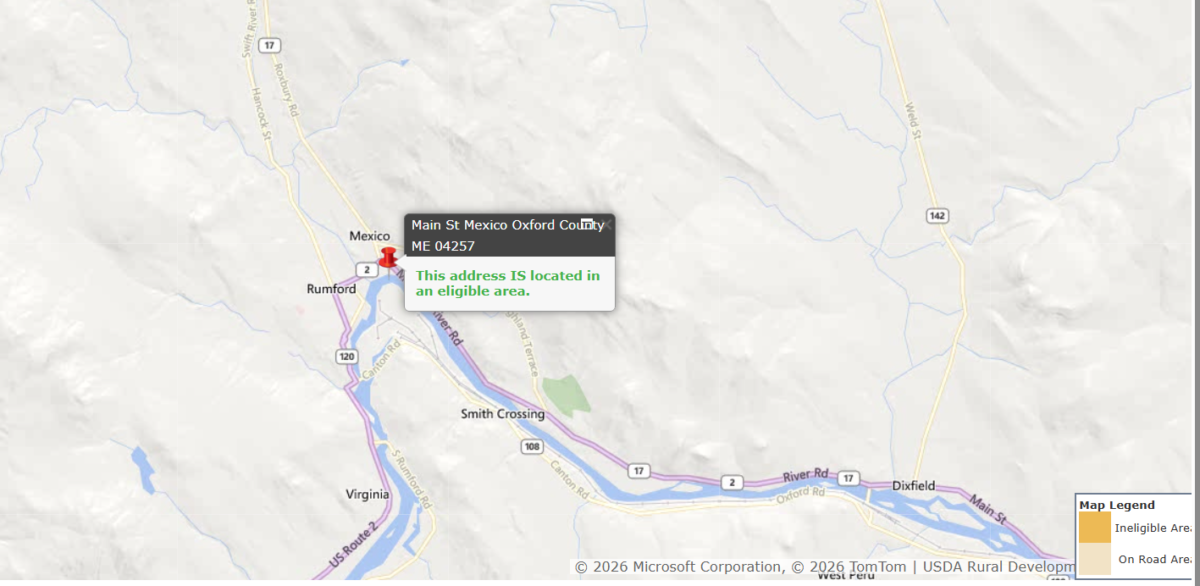
Result: ✅ This address IS located in an eligible area (green message).
This is very common in much of rural Maine (especially outside of bigger towns like Portland, Bangor, or Augusta). Many properties in Oxford, Aroostook, Piscataquis, Somerset, and Washington counties qualify, but always verify your exact address.
This map is crucial for individuals looking to purchase a home in rural or suburban areas and qualify for USDA loans. These USDA loans may offer competitive rates and no down payment for qualified buyers.
It’s straightforward to check if a property meets the USDA’s eligibility criteria, making the home-buying process more accessible for those seeking affordable financing options.
Who Qualifies for a USDA Loan?
Certain criteria must be met for a USDA loan application to qualify. The property eligibility factors begin with income limits.
The most crucial factor is USDA income eligibility: Applicants must have an annual household income at or below 115% of the median household income for the rural area where they plan to purchase a property.
Furthermore, applicants must have:
- Sufficient credit history.
- A credit score of a minimum of 640
- No debt delinquency.
- No defaulted loans within the past 12 months.
Finally, applicants should also demonstrate the ability to repay any mortgage debt incurred during the property purchase process.
Location Rules for USDA Property Eligibility
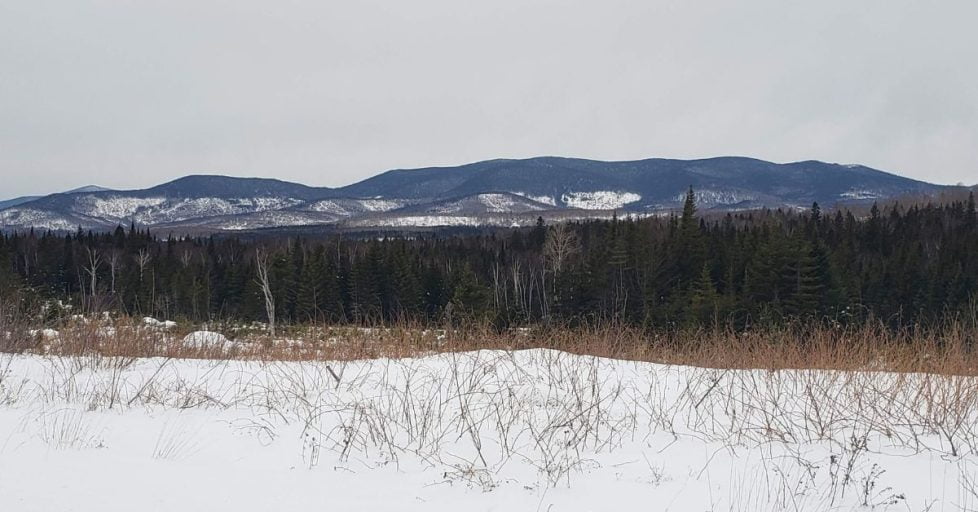
The first requirement is that USDA properties be located in an area deemed “rural.” To find out if your property qualifies, visit their website and do a USDA property search for your address using their eligibility site tool.
You can also contact your local USDA office for more information about eligibility in your area.
Income Eligibility Rules
The second requirement is to meet the income requirements to qualify for these types of loans. Your total household income must not exceed 115% of the median income in your area.
The median income varies based on location and family size, so it’s essential to check with your local USDA office or visit their website to find out the median income in your area.
This information will help you determine if you fall within the acceptable income range for eligibility. Furthermore, it will help you with the applications when the time comes. As you may know, living in a rural area is not always cheaper.
Credit Score Rules
Finally, there are credit score requirements to qualify for a USDA loan program. The minimum credit score required is 640.
However, this can vary depending on other factors:
- Such as your debt-to-income ratio.
- Whether you have any outstanding debts or bankruptcies.
It’s important to consider all of these factors when determining your eligibility for a loan.
What Properties Are Eligible for USDA Loans?
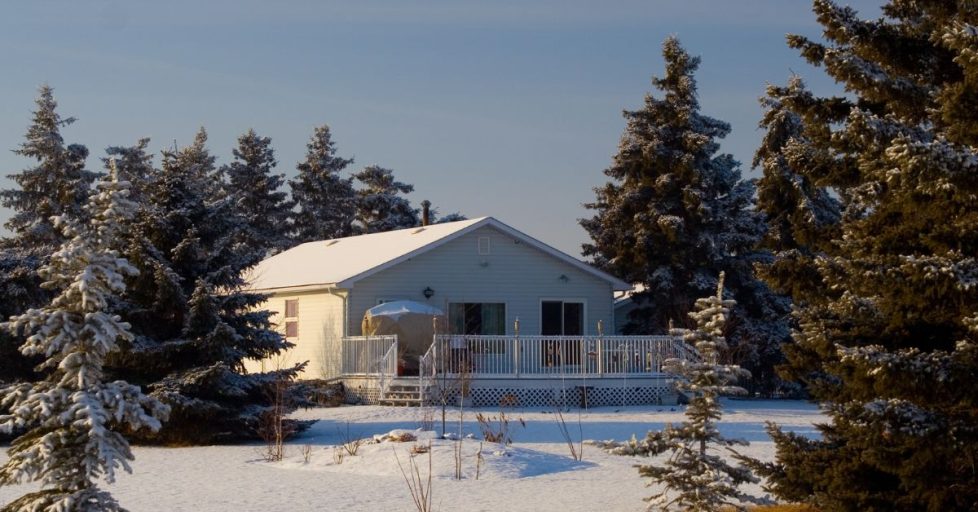
Properties must meet certain criteria regarding location and construction type to be eligible for these programs. They must also be located in rural areas, defined as towns or cities with a population under 20,000.
However, it cannot be used primarily for commercial or investment purposes.
Additionally, only single-family dwellings such as detached houses or mobile homes may qualify; apartments and other multi-family dwellings do not qualify for this financing program. The property must also be structurally sound to qualify.
These properties must be a resident’s primary residence to qualify, and the property address must be shown on the USDA property eligibility map.
Designated Areas For USDA Property Eligibility
In addition, all properties purchased through this program must be located within a designated rural area as defined by the USDA’s Rural Development Office (RDO).
These areas are generally characterized by lower population density and less commercial or industrial development than urban areas, but they can also include some suburban neighborhoods.
The RDO regularly updates its list of eligible rural areas, so it’s essential to check your area’s status before applying for a loan through this property eligibility program.
Conclusion: USDA Property Eligibility Requirements
Suppose you are looking at purchasing rural property and would like assistance from the U.S. Department of Agriculture with financing costs. In that case, you must understand what qualifies you as eligible under their program guidelines.
By understanding what types of properties and incomes qualify, you can make an informed decision about whether or not you should pursue a USDA loan when buying your new home in a rural area.
Understanding how your location fits these criteria is essential if you want access to this low-cost financing option when buying rural real estate.
Once you know you qualify under the USDA property eligibility program, you can search for property.
Your Turn: USDA Property Eligibility
Before purchasing a new piece of land, check if you qualify for these lower rates. Have you applied for one of these loans to buy a rural property? I’d love to hear about your experiences.
Frequently Asked Questions About USDA Property Eligibility
How do I know if a property qualifies for a USDA loan?
Start by checking the address on the official USDA eligibility map. If the property sits in an approved rural area and meets USDA property standards, it may qualify for financing.
What are the income limits for USDA property eligibility?
USDA loans usually require that total household income be at or below 115% of the area’s median income. Limits vary by county and household size.
Does a USDA loan require a down payment?
USDA loans are known for offering no-down-payment financing for eligible buyers. That makes them a common option for households that have a steady income but limited savings for upfront home-buying costs.
What types of homes qualify for USDA financing?
USDA loans usually apply to primary residences, not investment properties or homes used mainly for business. In most cases, eligible homes are single-family properties that are safe, livable, and located in a USDA-approved area.
What credit score do you need for a USDA loan?
640 is the minimum credit score required to apply for most lenders for a USDA loan in 2026.

Lisa moved from Southern New England to the rural mountains of Maine in 2020 with her husband. Drawing from her hands-on experience with slower-paced rural living, she shares the beauty, honest realities, and simple pleasures of life in the Maine woods, along with their rural travels across the United States and abroad.