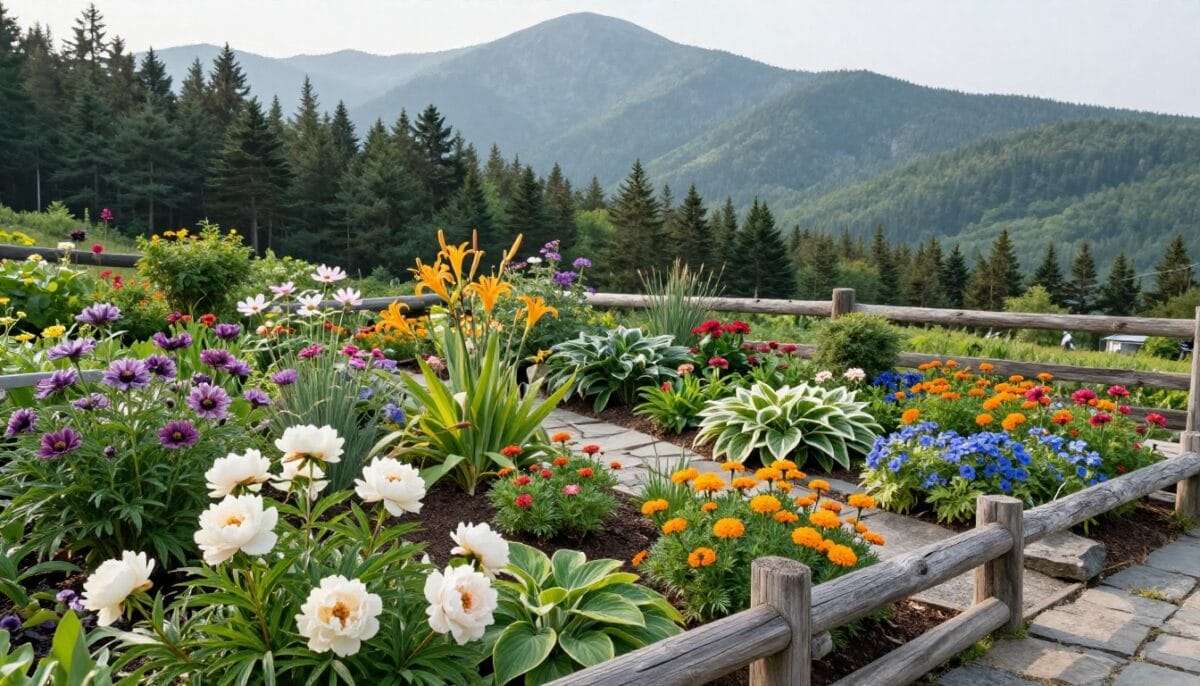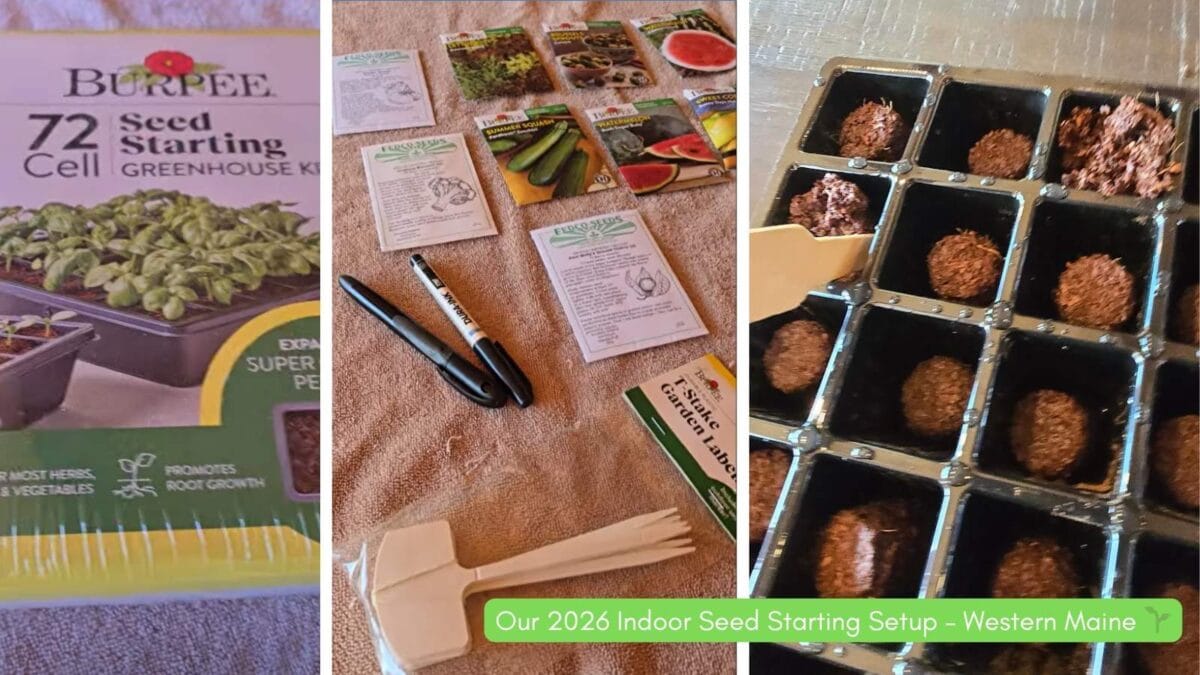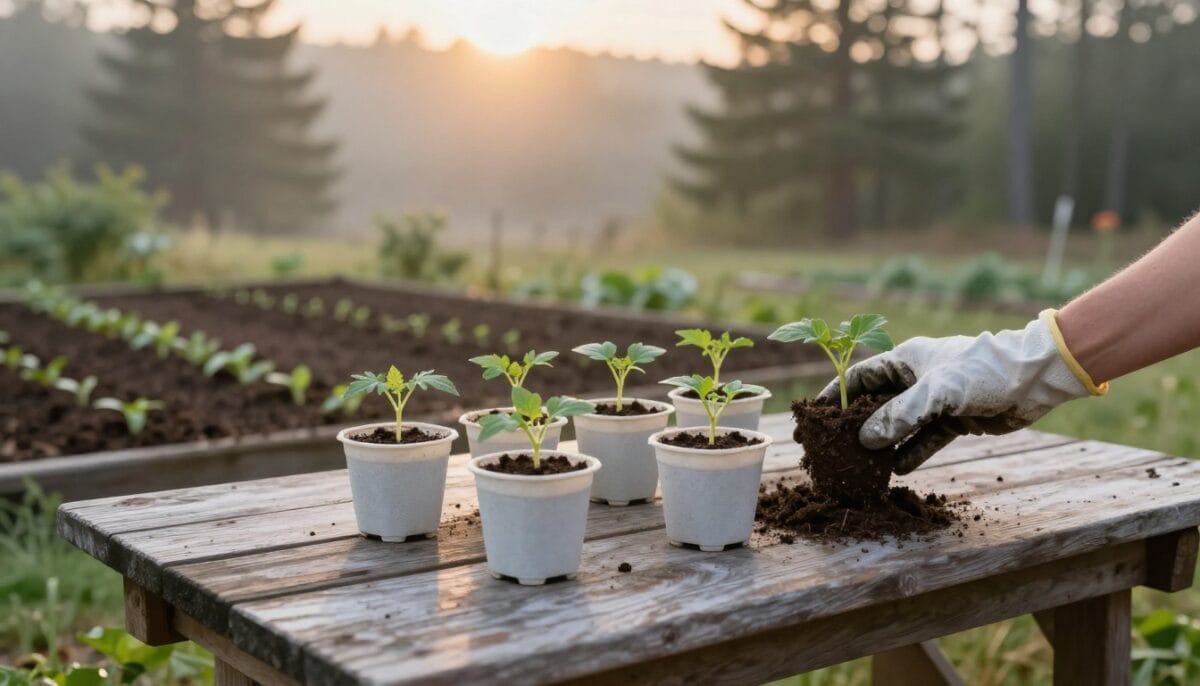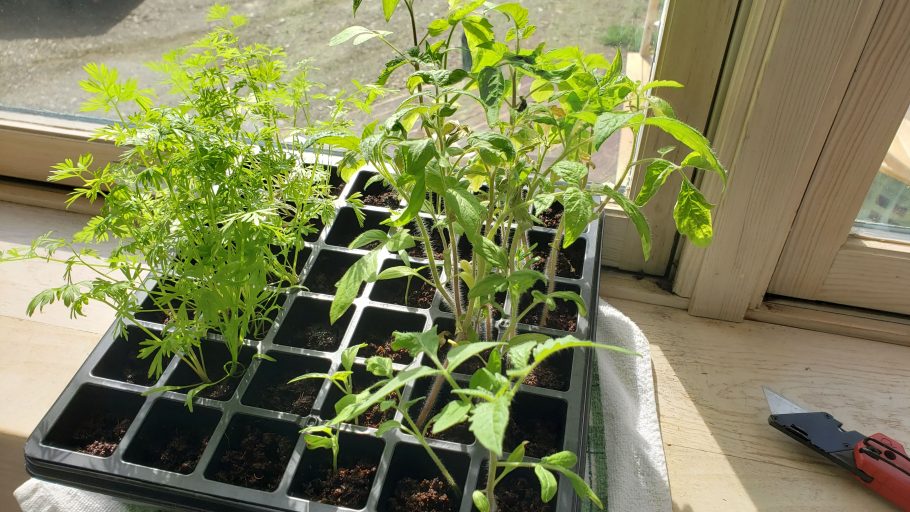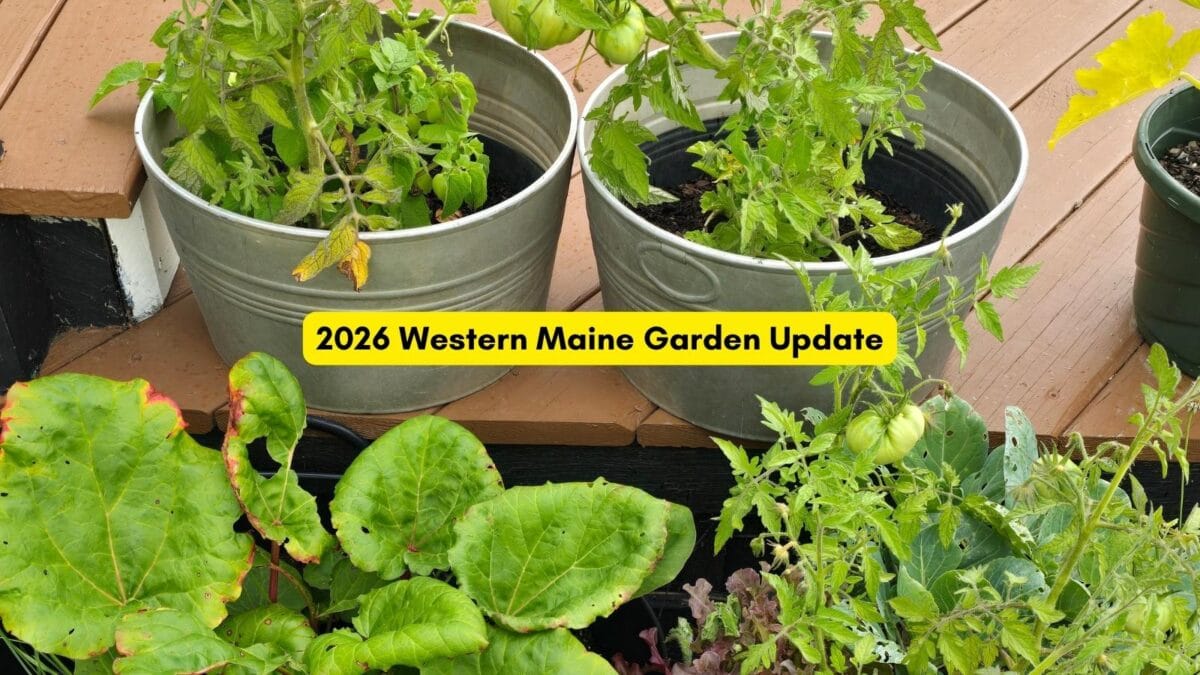
Here’s our mid-August 2026 Western Maine garden update. Back in late April, we shared our complete seed starting schedule for Western Maine. At the time, we were still dealing with melting snow, cold nights, and the usual short-season timing questions for Zone 4b/5a.
Now it’s mid-August, and it’s time for an honest look at how those indoor starts actually performed once they hit the garden.
Key Takeaways from Our Mid-August Garden
- Rhubarb is thriving; corn, tomatoes, and a cucumber are progressing well after following our spring seed-starting schedule.
- A soil moisture meter removed the guesswork and helped us water more accurately in Western Maine’s short season.
- Well-rotted manure improved soil structure and plant vigor, especially noticeable in the rhubarb and tomatoes.
- Timing from the original schedule still holds — starting tomatoes mid-to-late March gave us stronger plants ready for transplant.
- Consistent monitoring and soil improvement matter more than perfect weather in Zone 4b/5a.
What’s looking good right now
Rhubarb is doing great — strong, healthy plants that keep producing. Corn is coming up nicely. Tomatoes are finally stretching out and setting fruit (those mid-to-late March starts are paying off). We also have a cucumber coming along.
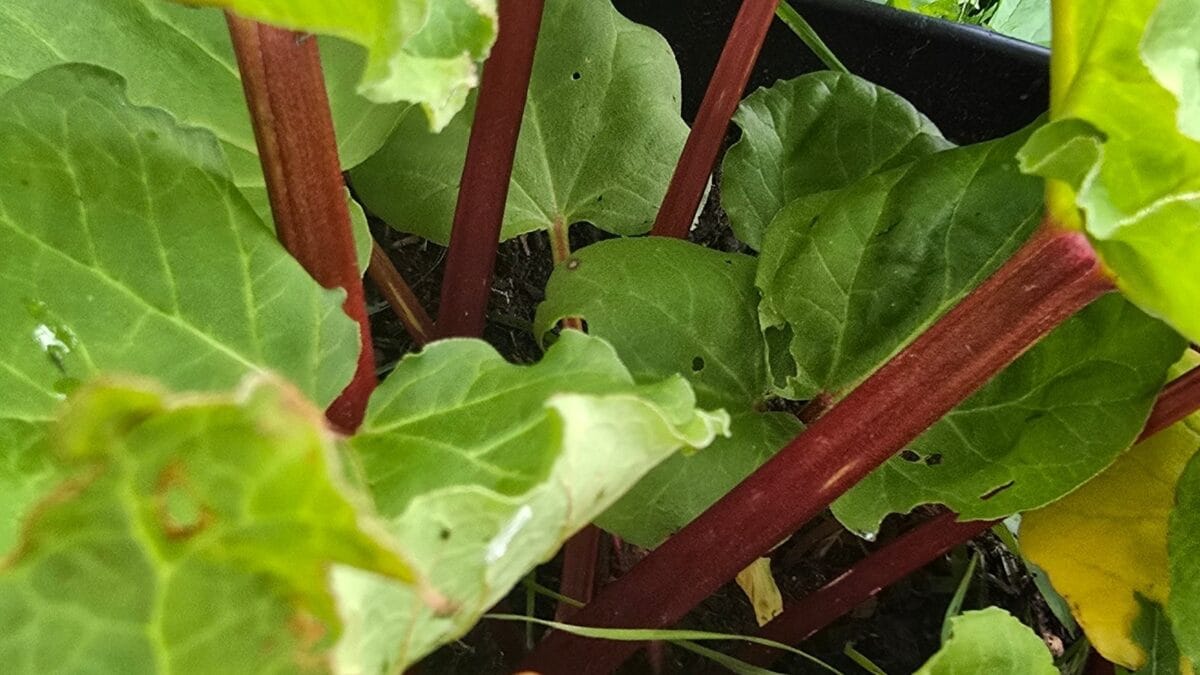
You can see the current state of the garden in this short video:
Two things that made a real difference this year
1. The soil moisture meter. We used to water based on how the surface looked or by sticking a finger in the soil. That method works… until it doesn’t. The moisture meter has been one of the most useful tools we added this season.
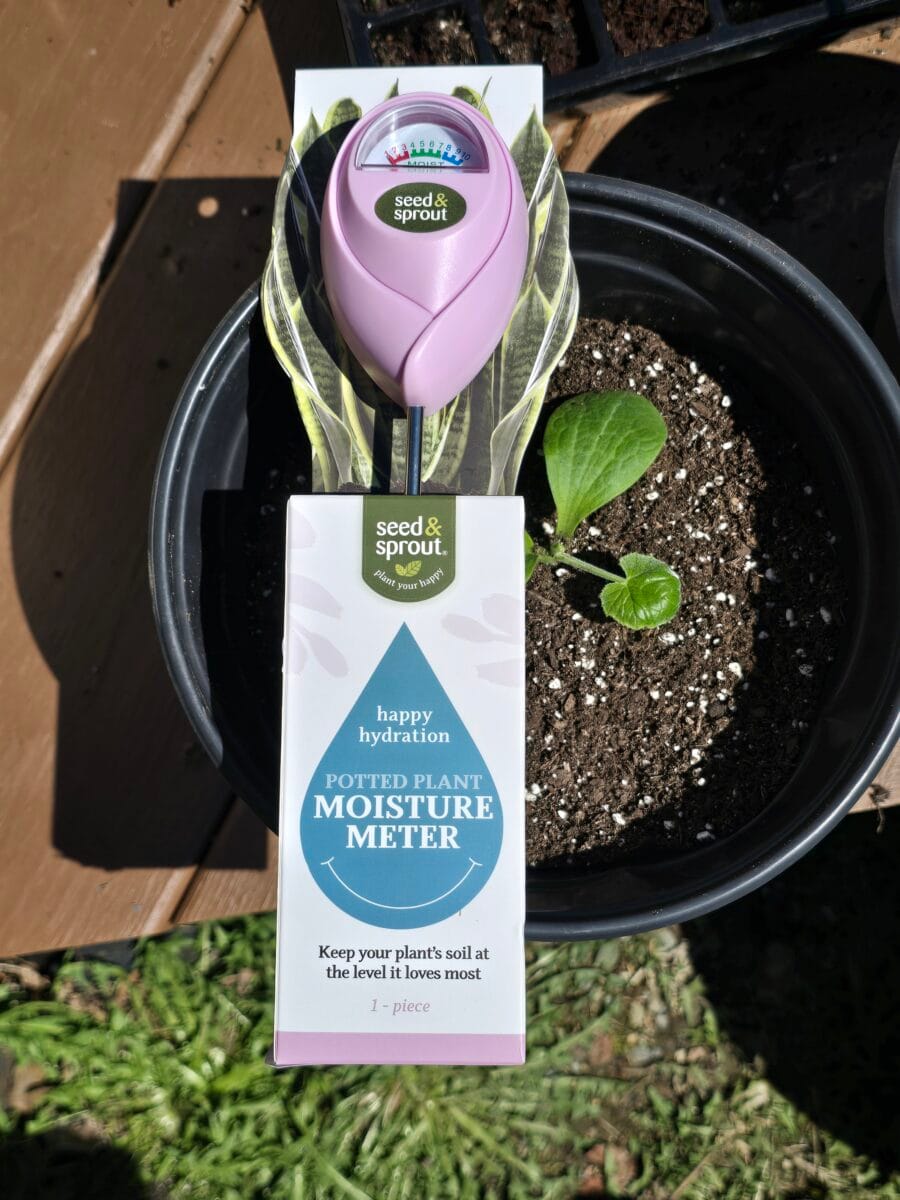
It takes the guesswork out, especially with tomatoes and cucumbers. We can check moisture at the root depth rather than just at the surface. In our mountain climate with cooler nights and uneven rainfall, this has helped us avoid both underwatering and the soggy conditions that can slow plants down or invite problems.
2. Well-rotted manure: We worked composted manure into the beds earlier in the season. The difference in soil structure and plant vigor has been noticeable. The rhubarb responded especially well, and the corn and tomatoes are growing stronger than in years when we relied more on lighter amendments.
In a short growing season, any improvement in soil fertility and moisture retention helps the plants make the most of the warm weeks we do get.
Looking back at the original schedule
The timing we followed in the spring still feels right for our location:
- Tomatoes started mid-to-late March gave us sturdy plants ready for transplant after the last frost risk.
- Keeping zucchini (and similar fast growers) later avoided the leggy, root-bound plants we’ve dealt with in previous years.
- Starting indoors remains essential here if we want a decent harvest before fall frosts arrive.
What’s next
We’ll keep monitoring moisture carefully as the weather shifts, side-dress if needed, and watch for the first real harvests from the tomatoes and cucumber. Corn will need consistent water as the ears start forming.
Short-season gardening in Western Maine is always a mix of patience and paying attention. This year the combination of better timing, improved soil, and actually knowing when the plants need water has made the garden feel more productive so far.
How is your garden looking this August? Any crops that surprised you, in a good way or a slow way? We’d love to hear what’s working (or not) in your zone.
— Lisa (and husband Pete with Victorian Bulldog Stella), Rural Area Life

Lisa moved from Southern New England to the rural mountains of Maine in 2020 with her husband. Drawing from her hands-on experience with slower-paced rural living, she shares the beauty, honest realities, and simple pleasures of life in the Maine woods, along with their rural travels across the United States and abroad.