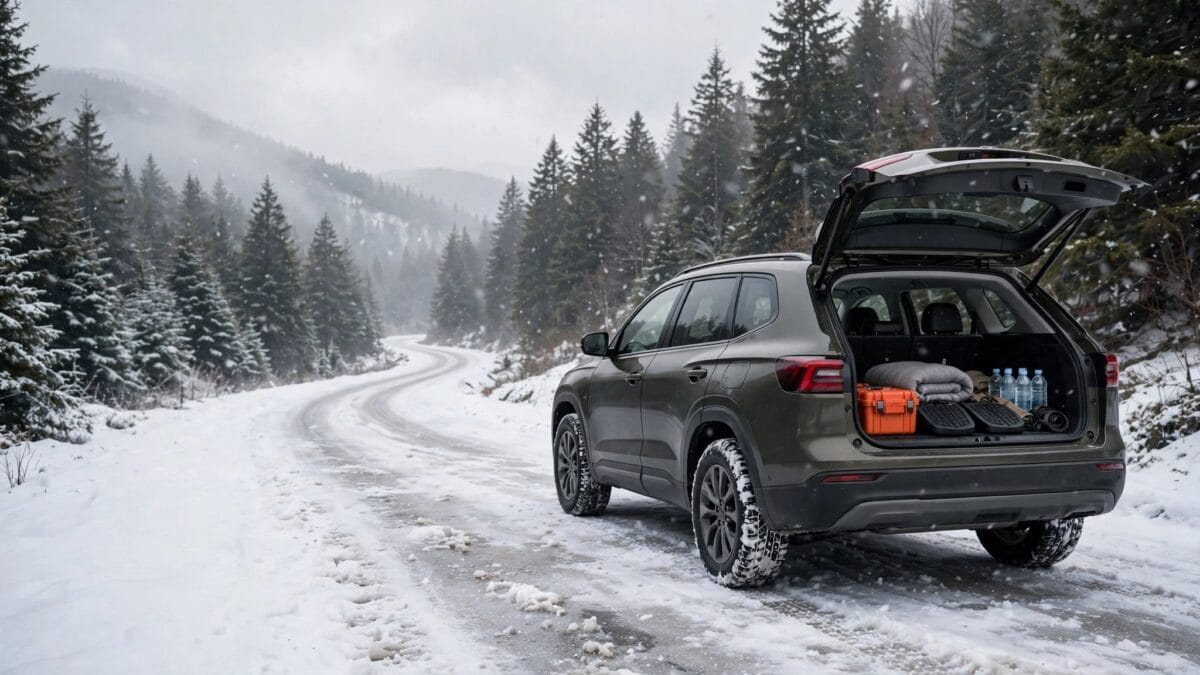
Rural roads in winter call for good tires, extra stopping room, and a willingness to postpone a trip when conditions turn dangerous. Four-wheel drive can help you get moving, but it won’t make an icy road safe.
Here in the rural mountains of Maine, preparation is a priority for us. When help is miles away, what you carry and when you leave matter as much as what you drive.
Start with the tires, then work through the supplies and driving decisions that make winter travel more manageable.
Key Takeaways for Rural Winters
- Put winter tires ahead of a vehicle upgrade when comparing similar cars for snow and ice.
- Allow much more stopping room, especially near bridges, hills, and intersections.
- Carry traction aids, warm clothing, water, food, and a way to charge your phone.
- Delay travel when blowing snow hides road edges or freezing rain makes traction unreliable.
An appointment can usually wait. Getting stranded between towns is a much bigger problem.
Choose Winter Tires Before Choosing a Different Car
A familiar car with suitable cold-weather tires can be more useful than a larger vehicle wearing tires poorly suited to cold weather.
Winter tires matter more than the badge
For snow and ice performance, tires designed for cold weather usually matter more than the difference between similar car models. Their rubber compounds and tread patterns are designed for cold-weather grip.
Fit that set on all four wheels. Studded snow tires are another option for icy conditions where they’re legal. (I love my studded tires here in Maine with our rural winters being icy and snowy from December through April.)
All-wheel drive helps distribute power when accelerating. Braking and cornering still depend heavily on tire grip.
Ground clearance matters in deeper snow, too. Once snow piles against the underbody, even good tires have limits. Don’t treat a taller vehicle as permission to tackle an unplowed road.
Prius versus C-Max: understand the tire comparison
One rural-road comparison involved a 2007 Prius running 195/65R15 tires and a 2017 C-Max running 225/50R17 tires. These describe particular setups, not universal factory specifications.
The C-Max tires are 30 millimeters wider apiece. That doesn’t automatically mean more useful grip; tire width alone doesn’t establish the size of the contact patch.
The C-Max setup also has shorter sidewalls, which can feel firmer over potholes and frost heaves.
Its L setting increases regenerative braking when you release the accelerator. It isn’t a conventional low gear or true one-pedal stopping mode. Expect stronger deceleration rather than ordinary coasting, an important distinction on slippery roads.
Prepare the Vehicle Before the First Storm
Small maintenance problems become bigger ones when temperatures drop. A weak battery or empty washer reservoir can turn a routine drive into trouble.
One of our local weathermen is predicting between 95-125″ of snow for our area this year. That is something we have to prepare for.
Give tires, fluids, and visibility some attention for Rural Winters
Inspect tire tread, damage, and inflation pressure when the tires are cold. A tire can look fine even as it loses pressure as temperatures fall.
Use winter-rated windshield washer fluid suited to your temperatures. Replace worn wipers, and make sure the defroster, heater, lights, and battery are working properly. NHTSA’s winter vehicle guidance covers these preparations.
Clear snow from the roof, lights, windows, and license plates before leaving.
Review your collision, comprehensive, towing, and roadside-assistance coverage before winter, too. Knowing what your policy includes is easier at the kitchen table than beside a snowbank.
Make frosty mornings less work in Rural Winters
A Daily Yonder writer reported paying about $25 apiece for heavy-duty nylon windshield covers. That’s a reported purchase price, not a current price promise.
These covers use flaps trapped inside closed doors and elastic straps around the side mirrors. They can prevent ice buildup on the covered glass and reduce the need for scraping.
Keep an ice scraper and brush anyway. Side windows, mirrors, and lights still need attention.
Keep the fuel tank at least half full. Rural gas stations may be far apart, and an unexpected detour can add miles.
Pack Emergency Supplies You Can Reach
Keep a vehicle kit separate from your emergency supplies at home. Supplies in the pantry won’t help much when you’re waiting beside a county road.
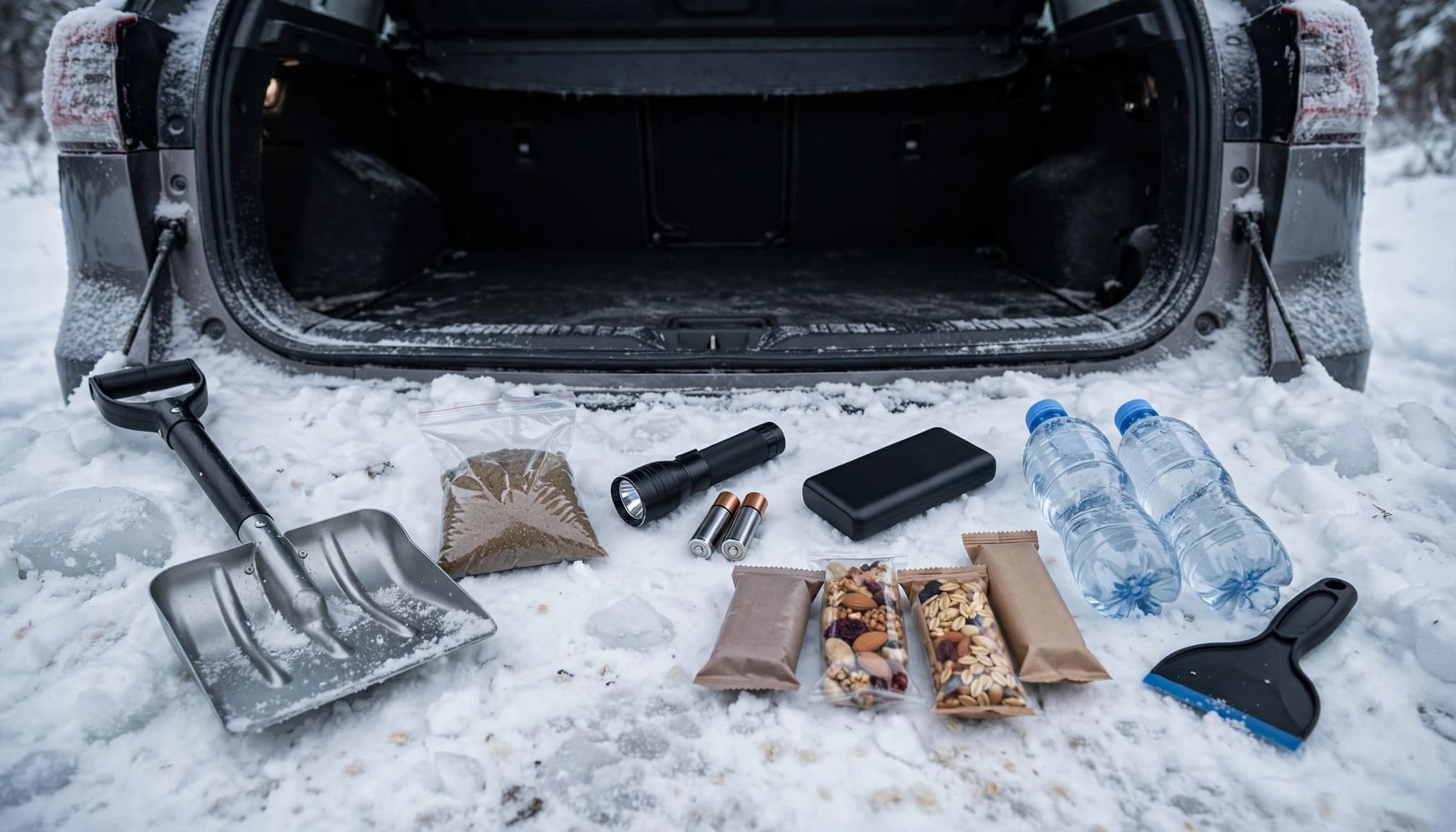
Pack these items together during rural winters:
- Carry sand or non-clumping cat litter for temporary grip to help your vehicle get moving, plus a compact snow shovel.
- Include lock de-icer, an ice scraper, a flashlight, and spare batteries. Keep de-icer outside the vehicle if frozen locks could prevent entry.
- Bring a charged power bank and the correct charging cable.
- Store non-perishable snacks in a sturdy, sealed container that discourages mice. (Yep, they do like chocolate, fruit snacks, and tissues!)
- Add drinking water, blankets, gloves, warm boots, first-aid supplies, and necessary medications.
Water left in a parked car can freeze. Fill bottles before each trip, leave expansion space, and bring them inside afterward.
For longer drives, pack winter road-trip essentials for every passenger, including children and pets.
Keep warm clothing accessible rather than buried beneath luggage. If you become stranded, stay with the vehicle unless there’s an immediate danger. Call for help and keep the exhaust pipe clear of snow before running the engine.
Give Yourself More Stopping Room
The stopping distance on snow and ice can be four to ten times that on dry pavement. The actual distance depends on speed, tires, slope, temperature, and the road surface.
Slow down before the slippery section
Manage speed and space so you can brake gently without relying on the vehicle ahead to stop first. AAA’s cold-weather driving advice recommends gradual acceleration and deceleration.
Bridges and overpasses can freeze before nearby pavement. Intersections may become polished where vehicles repeatedly brake and accelerate.
Hills add another challenge: gravity works against you downhill, while spinning tires can leave you stuck uphill. Reduce speed before reaching these areas.
Snow-covered gravel roads can hide ruts, potholes, and loose edges. Don’t assume a smooth white surface means a smooth road underneath.
Leave enough space to react to the road itself, not just the brake lights ahead.
Match your speed to what you can see
Fog and blowing snow in rural winters shorten the distance available to spot trouble. Use low-beam headlights, avoid cruise control, and drive slowly enough to stop within the visible roadway.
Crawling unpredictably can surprise following traffic, but don’t speed up beyond what visibility allows.
If someone wants to pass, use a wide, plowed turnout when safe to do so. Don’t stop in an intersection or on a blind curve.
On a planned group trip, change lead drivers only at a safe stopping place. Never follow someone’s taillights into conditions you can’t judge yourself.
Know When to Delay or Stay Home
Blowing snow can erase the white edge line, often called the fog line, along with the shoulder. Open fields offer little protection from wind, so one stretch may look clear while the next disappears.
Before leaving, check the forecast, weather radar, local road reports on Facebook, and current road conditions, especially when a winter storm is approaching. Moving your departure earlier or later may help you avoid the worst conditions. Radar alone won’t reveal black ice or snow already drifting across pavement.
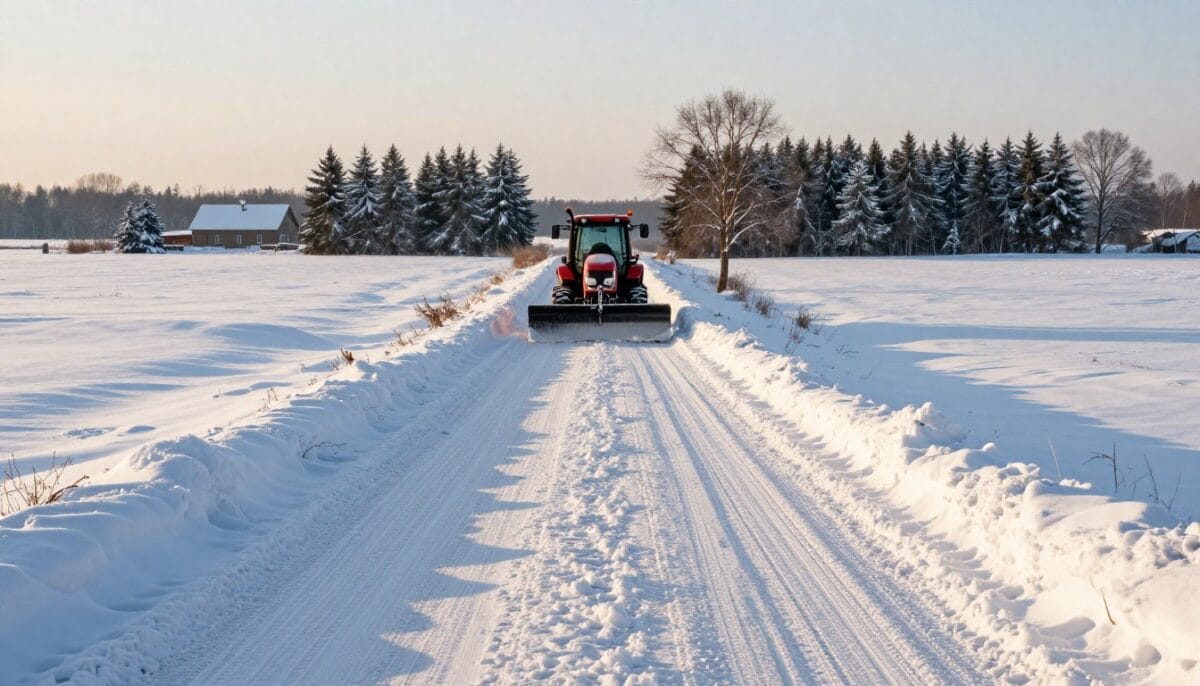
Delay nonessential travel during white-out conditions, freezing rain, road closures, or official travel warnings. If visibility deteriorates while driving, reach a safe place off the roadway before conditions become impossible.
Winter also compounds the usual hazards of rural driving. Watch for deer and moose near woods, especially around dawn and dusk. Leave extra room behind snowmobile trailers, which can block your view ahead.
Download maps before leaving and tell someone your route and expected arrival time. Our advice on reliable rural cell service includes preparing for coverage gaps.
Don’t let a navigation app talk you into an unfamiliar shortcut during a storm. A longer route you know may be the more sensible choice.
Frequently Asked Questions About Winter Driving
What are the three P’s of winter driving?
The three P’s are Prepare, Protect, and Prevent.
Prepare means getting the vehicle, supplies, and route ready before departure. Protect means wearing seat belts, using appropriate child restraints, and dressing for the cold.
Prevent means reducing crash risks through sober, attentive driving, slower speeds, and greater following distance.
For rural travel, preparation also includes enough fuel and a communication plan. A charged phone is useful, but service may disappear between towns. Give someone enough information to recognize when you’re overdue.
Is a front-wheel-drive hybrid good for snowy rural roads?
A front-wheel-drive Prius or C-Max can handle plowed snowy roads with suitable cold-weather tires. Neither has unlimited traction or clearance.
A C-Max on ordinary all-season tires isn’t a fair comparison with a Prius on studded snow tires. Different tires can explain much of the difference a driver notices.
Choose around your actual roads: maintained pavement, rough gravel, steep grades, or regularly drifting snow. These trips are harder because grip and visibility can change quickly. No vehicle removes the need to slow down or postpone travel.
Make Winter Preparation Part of Your Routine
Rural winters are easier to manage when you prepare before the weather turns. Suitable tires, readily available supplies, and generous stopping distance give you more options when conditions change.
Make a quick vehicle-and-weather review part of every winter departure. Keep permission to postpone in that routine, too.
The most useful winter driving skill is recognizing when the trip can wait. Do you drive often in rural winters? I’d love to hear more about it in the comments below.
Disclosure: Parts of this post were drafted with AI assistance and then reviewed and edited by me based on local observations and public information.

Lisa moved from Southern New England to the rural mountains of Maine in 2020 with her husband. Drawing from her hands-on experience with slower-paced rural living, she shares the beauty, honest realities, and simple pleasures of life in the Maine woods, along with their rural travels across the United States and abroad.