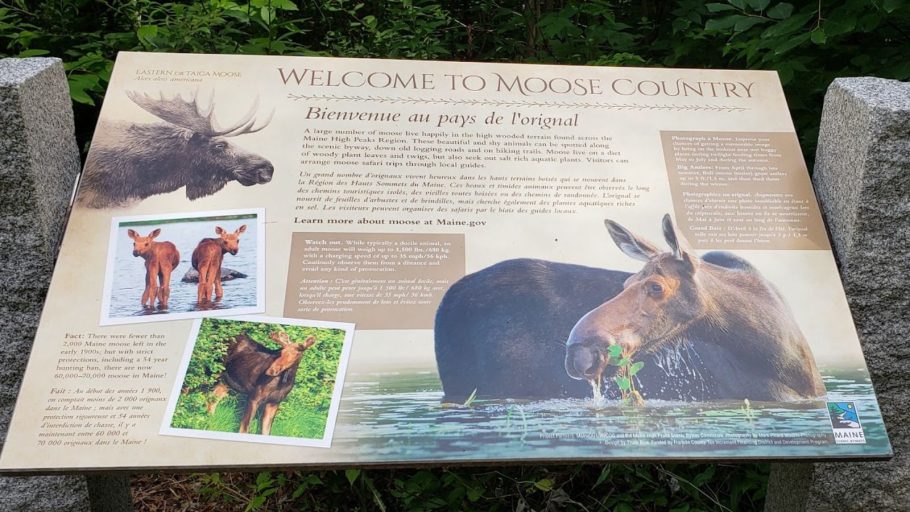
Maine moose are not always easy to see when you visit Maine. The state of Maine is synonymous with wildlife, particularly the moose. With the moose population in Maine, according to the Maine government, exceeding 60,000, it’s no secret that people flock to Maine to see one of these gentle creatures.
But what are the chances of seeing a Maine moose, and where are the best places to look? You can see moose in Maine, but your best odds come in late spring through early fall, at dawn or dusk, in the northern and western parts of the state.
In this guide, we’ll take you through everything you need to know to increase your chances of glimpsing a moose in Western Maine, as we’ve lived here for over 5 years.
Key Maine Moose Points:
- Maine has a moose population of over 60,000, but sightings are never guaranteed.
- Your best chance to see a moose in Maine is from May through early October, especially at dawn and dusk.
- Top places to look include Baxter State Park, Moosehead Lake, the Kennebec River Valley, the Rangeley Lakes region, and Aroostook County.
- Moose are more active near wetlands, lakes, streams, boggy areas, and roadsides during cool, damp, or overcast weather.
- Guided moose tours can improve your chances because local guides know where and when moose are most active.
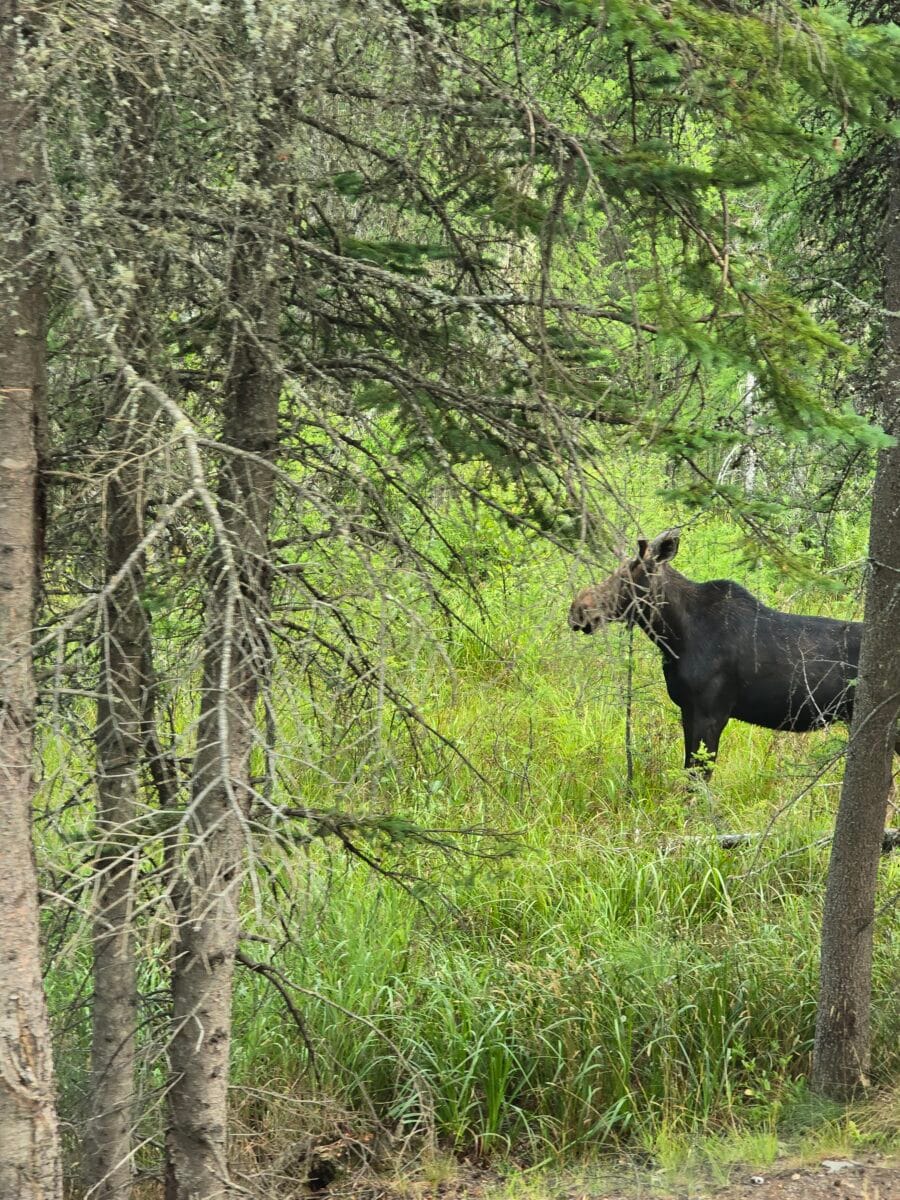
Moose enjoying a snack right along the road — common in Western Maine!
Best Time to See Moose in Maine
The first thing you need to know about spotting a moose in Maine is that certain times of the year are better than others. Your best bet is between May and early October, during the summer and early fall, when you can also catch the start of the best leaf peeping in Maine.
During this time, moose are found grazing in boggy areas or near water sources, such as streams or lakes. However, they may be roaming the roadside and come out of nowhere, hitting your vehicle. It has happened to us here twice in the past 6 years.
I caught this moose on video the other day while traveling. It was hard to get a good shot with the angle of the sun, but it was around 9 am.
2026 Moose Updates Near Us
Living here in the mountains of Western Maine near Quill Hill, we’re right in the heart of prime moose country. As of June 2026, Maine’s moose population remains strong at around 60,000–70,000 animals, with the Rangeley Lakes area (especially Route 16 between Rangeley and Stratton, often called “Moose Alley”) continuing to offer excellent sighting opportunities at dawn and dusk.
Quill Hill itself is a fantastic spot; drive up for the 360-degree views and keep your eyes open along the dirt road, especially when it’s not too hot. My husband and I still scan the roads and bogs every time we head out, and we’ve had good luck with roadside sightings this spring.

The 2026 moose permit lottery drawing happened on June 20, so hunting season will be here before we know it; always a good reminder to drive extra carefully at night. We’ve been moose-hit twice in the 5 years living here, and it did damage to my husband’s big truck.
Stella, our bulldog, gets a kick out of the excitement too, though she prefers watching from the safety of the truck as long as we don’t get hit by one!
If you’re visiting the area, early morning or evening drives around Rangeley are your best bet right now.
Mating Season
The moose are most active in the fall during their mating season, or “rut.” The male moose have large, palmated antlers during the mating season; they shed and regrow each year.
The antlers help demonstrate their dominance and protect their eyes during competition for a mate. They will also splash their antlers with urine, a scent that entices cows to breed.
After the mating season, bulls shed their antlers in early winter to conserve energy during the cold weather. But in spring, the process starts again as antler bone begins to grow under a velvety skin covering.
Did you know that antlers are one of the fastest-growing tissues in the animal kingdom?
They can grow up to 8 inches in just nine days! By September, testosterone surges in bulls, and the velvet begins to shed, leaving the bare antlers behind.
Antlers on cows are rare, and young moose may have small buds by September, with larger development in older bulls. Maximum antler development is reached at age five and begins to decline in their teens.
A bull’s antler spread is typically no more than 65 inches, with a spread of 55 inches considered large. This cycle is an amazing example of the adaptability and survival instincts of the animal kingdom.
Visitors always ask: “Where can I see a moose in Maine?” It’s not always an easy question to answer, as it comes with no guarantee.
We had an aunt up a few years ago, and we looked every evening at dusk for where they usually were, and she never got to see one until her last visit last summer.
Best Places to See Moose in Maine
Next, you need to know where the best place to see a moose in Maine is. The best areas to spot moose are often seen in Baxter State Park, Moosehead Lake, Quill Hill in the Rangeley Lakes region, Saddleback Mountain, and the Kennebec River Valley.
These areas offer ideal habitats for moose, with plenty of food, shade, and water. Remember, moose are most active at dawn and dusk, so plan your trip accordingly. Be aware that moose watching in Maine doesn’t always result in actually seeing one.
We had our aunt here a few years ago, and every evening we went to a spot where they were known to be seen. We never saw one for the month she was here that first year visiting.
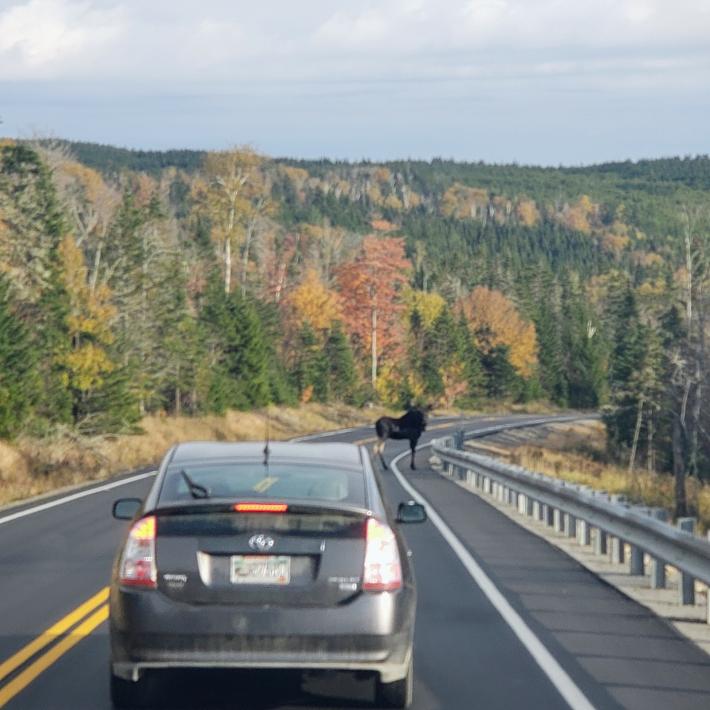
Of course, after she left, we would see them more often, like this one alongside the road. That moose walked right over the guardrail!
Moose Forecasts
Another factor to consider is the weather. Moose tend to come out of the forest on cool, damp days, and they are more likely to be active during overcast days than in bright sunlight. They can often be seen in the winter months on snowmobile trails.
We have often seen them there on the snowmobile trail every season. Most have been in the distance, but some make you stop as they are blocking the trail. Never engage with them, especially if they are with their young.
So, if you are planning a trip to Maine, keep an eye on the weather forecast and plan your moose-spotting activities accordingly. Since prime moose habitat is also tick country, review our tick safety guide before heading outdoors.
Are Moose Sightings in Maine Guaranteed?
Firstly, it’s important to note that moose sightings are not guaranteed, but the chances of seeing one can increase by visiting the right areas and knowing when to go. Maine moose, like most moose worldwide, are most active at dawn and dusk, so it’s best to plan your sightings around those times of day.
The two times a moose hit us were in the early evening and at around 9 pm one night.
Maine moose are also more prevalent in the northern and western parts of Maine, especially in areas with dense forests, wetlands, and streams.
Some great places to start your search for moose include:
- The Moosehead Lake region
- Rangeley Lakes region
- Baxter State Park
- Aroostook County
Best time, best place, best conditions for viewing Moose
| Best Season | Mid-May to mid-July and September–October | Mid-May to mid-July and September–October | Moose are feeding heavily near water in summer and are most active during the fall rut (mating season). |
| Best Time of Day | Dawn and Dusk | Moose are crepuscular — they move and feed most when the light is low. |
| Best Locations | Moosehead Lake area, Baxter State Park, Aroostook County, Rangeley Lakes, Kennebec River Valley | These northern and western areas have the highest moose population and ideal habitat. |
| Best Weather | Cool, overcast, or damp days | Moose stay out longer rather than hiding in the thick forest shade on hot, sunny days. |
| Best Habitat | Wetlands, bogs, ponds, and logging roads | Prime feeding areas where moose come out to graze and drink. |
| Safety Tips | Drive slowly on rural roads at dawn/dusk | Reduces the risk of sudden moose-vehicle collisions (they can appear out of nowhere). |
Moose Tours In Maine
When it comes to increasing your chances of seeing moose in Maine, nothing beats going with a trained guide. Many experienced outdoor guides in Maine specialize in moose watching.
They know the best places and times to spot moose and can answer any questions you may have about moose behavior and habitat.
Book a tour with a guide to get a personalized experience and increase your chances of seeing a moose. You could even book a Maine Moose safari.
Safety Guidance
There are a few things you should keep in mind when approaching a moose. These include:
- Staying in the car
- Keeping distance
- Watching for roadside movement at dusk
- Never approaching a moose with its calves
Moose Hunting In Maine
Maine’s moose hunting season typically runs from late September through late November. Bagging a moose requires patience, skill, and proper licensing. Apply for a permit months in advance – they’re limited and awarded by a lottery.
We saw one last year that was captured by a 16-year-old female. She was so excited! We were on the trails in our 4×4 when we came upon her and her catch.
Conclusion: Best Place To See Moose in Maine
In short, if you want an exciting wildlife trip, head to rural Maine to look for a moose. With good planning and a little know-how, you can improve your odds of spotting these impressive animals where they live. Visit these top areas first: the Moosehead Lake region, the Rangeley Lakes region, Baxter State Park, and Aroostook County.
So, pack your bags, map out your visit, and get ready for a memorable trip to Maine. If you’re searching for Maine moose, this is one experience you won’t forget.
Spotted any moose near Rangeley or Quill Hill this fall? Share your story and photo in the comments; we’d love to hear it! 🫎 Like if this guide helped plan your Maine trip!
Frequently Asked Questions About Maine Moose Sightings
What are the chances of seeing a moose in Maine?
You can improve your odds, but no sighting is guaranteed. Maine has a large moose population, with over 60,000 animals, yet moose are still hard to spot because they move u003ca href=u0022https://ruralarealife.com/forest-management-on-your-own-property/u0022u003ethrough dense forestsu003c/au003e, wetlands, and quiet back roads.u003cbru003e
When is the best time to see a moose in Maine?
The best time is from May through early October. In addition, dawn and dusk are the best times of day because moose are most active then.u003cbru003e
Where are the best places to see moose in Maine?
The article highlights Baxter State Park, Moosehead Lake, Quill Hill in Rangeley, the Kennebec River Valley, the Rangeley Lakes region, and Aroostook County. These areas have the food, water, cover, and habitat that moose need.u003cbru003e
What weather is best for spotting moose in Maine?
Cool, damp, and overcast days usually improve your chances. Moose are more likely to leave the woods and move near roads, trails, wetlands, and water sources when temperatures are lower.u003cbru003e
Is a guided moose tour worth it in Maine?
Yes, a guided tour can help because trained local guides know the best times, routes, and habitats for moose watching. For visitors with limited time, u003ca href=u0022https://ruralarealife.com/rural-tourism/u0022u003ea touru003c/au003e can be one of the easiest ways to raise the odds of a sighting.u003cbru003e

Lisa moved from Southern New England to the rural mountains of Maine in 2020 with her husband. Drawing from her hands-on experience with slower-paced rural living, she shares the beauty, honest realities, and simple pleasures of life in the Maine woods, along with their rural travels across the United States and abroad.